
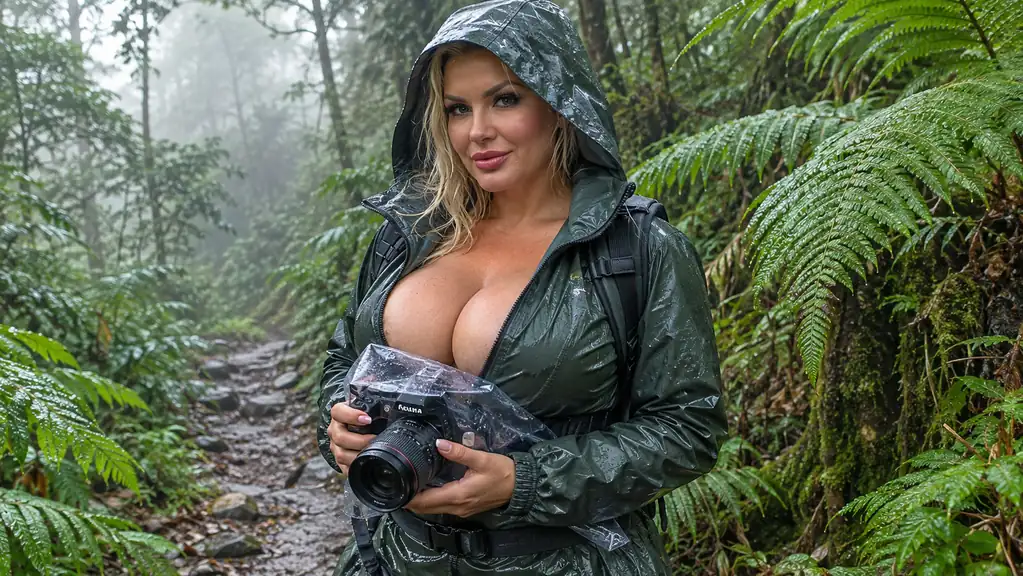
The first time I used the OP/TECH USA Rainsleeve, I was standing in the rain at Rainbow Falls with a camera bag over one shoulder and a plastic grocery bag in my hand. That grocery bag had been my rain plan for years: camera inside, rubber band around the lens, hope for the best. In January 2025 I finally bought the two-pack of OP/TECH USA Rainsleeve covers, mostly because I was tired of fighting with the bag while a waterfall kept doing its thing in front of me. I have used one of those sleeves for about 22 months now, on wet trails, at the coast, and in the steamy air around my own kitchen. This is the honest version: what the sleeve protects, what it does not, and who should skip it.
I am not going to pretend a piece of soft plastic changed my photography. It did not. What it changed was how often I brought the camera out when the sky looked bad. Before, I left the camera in the car on rainy Saturdays because I did not want to baby a grocery bag while hiking. Now the sleeve lives folded in the front pocket of my sling bag, and I stop thinking about the weather quite so much. That is a smaller claim, and a more useful one.
The Quick Verdict
A packable rain cover that keeps the camera body and lens barrel out of the rain. It is not a fitted jacket, it will not save a dropped camera, and the small size has real limits, but it earns its place in the bag.
Amazon Check Today's Price →If your rain plan is still a grocery bag, start here
The OP/TECH USA Rainsleeve two-pack folds flat, weighs 27.22 g, and fits cameras up to 4.5 inches in diameter and 8 inches long. Check the current listing before you buy, because this listing is the small size two-pack.
Amazon Check Today's Price on Amazon →How I've Used It
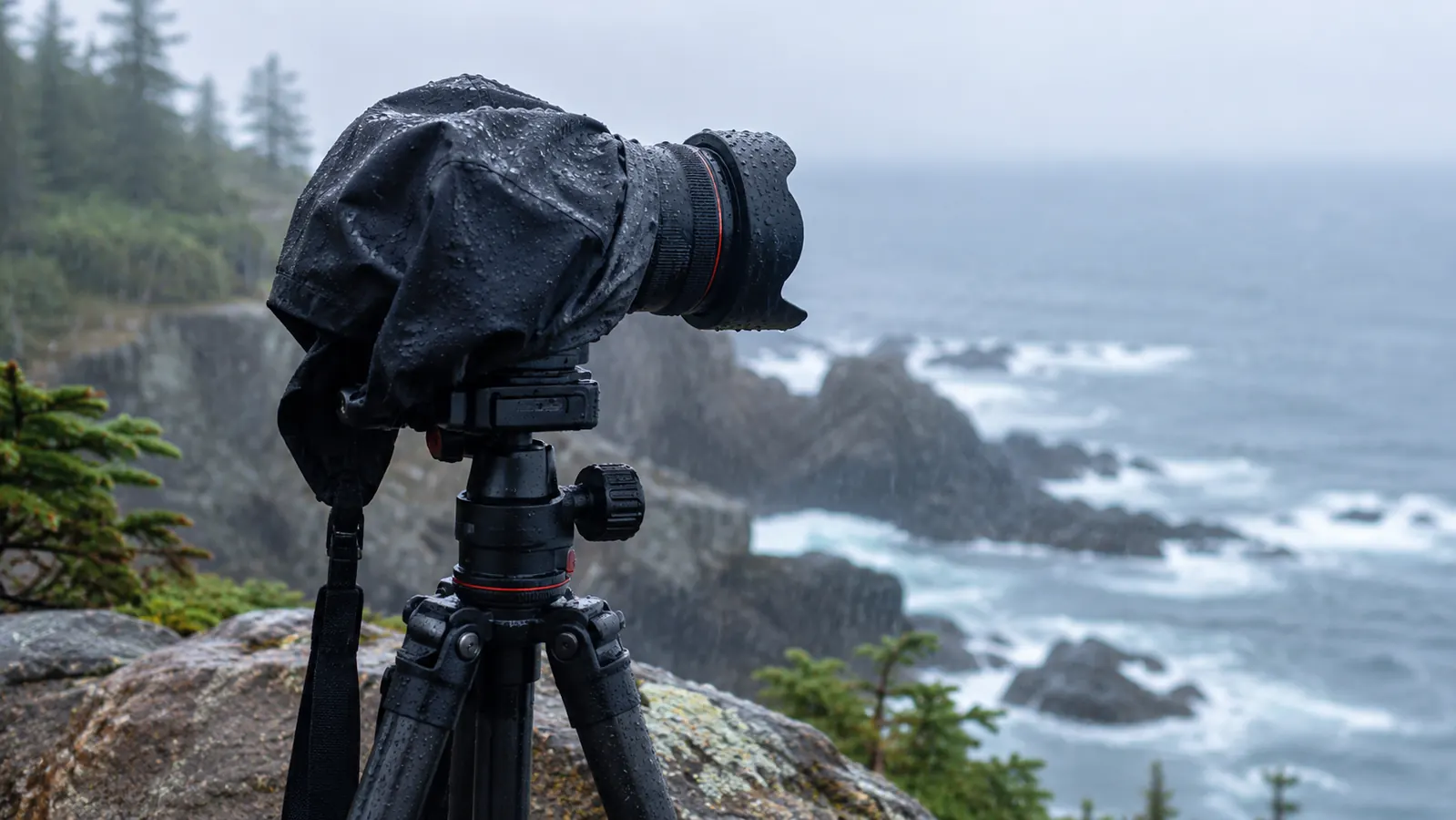
I bought the two-pack in January 2025. My first real test was a rainy Saturday at Rainbow Falls, the kind of morning where the trail turns slick and the falls throw mist twenty feet past the railing. I fitted the sleeve over my camera and my 24-105mm zoom, which is my everyday lens. The sleeve covered the body and most of the lens barrel, and I could see the top controls through the material. I shot for about forty minutes. When I took the sleeve off, the camera was dry. The front element had water spots, because the front glass is still out in the weather, so I wiped it with a microfiber cloth from my cleaning kit and kept going.
Since then I have used it at Akaka Falls, on the coast at Onomea Bay, at Liliuokalani Gardens, and at the Hilo Farmers Market on a misty morning. I have not used it in a downpour for hours, and I have not used it underwater, obviously. I have used it in the sort of rain Hilo actually gets: steady, warm, sideways at times, and heavy enough that you feel it on your shoulders. That is the test I care about.
The sleeve also comes with me when there is no rain at all. It weighs 27.22 g, so it sits in the front pocket of my sling bag and I forget about it until the sky changes. That is the main reason it stays. A cover that lives at home is not a cover.
What the Rainsleeve Actually Protects
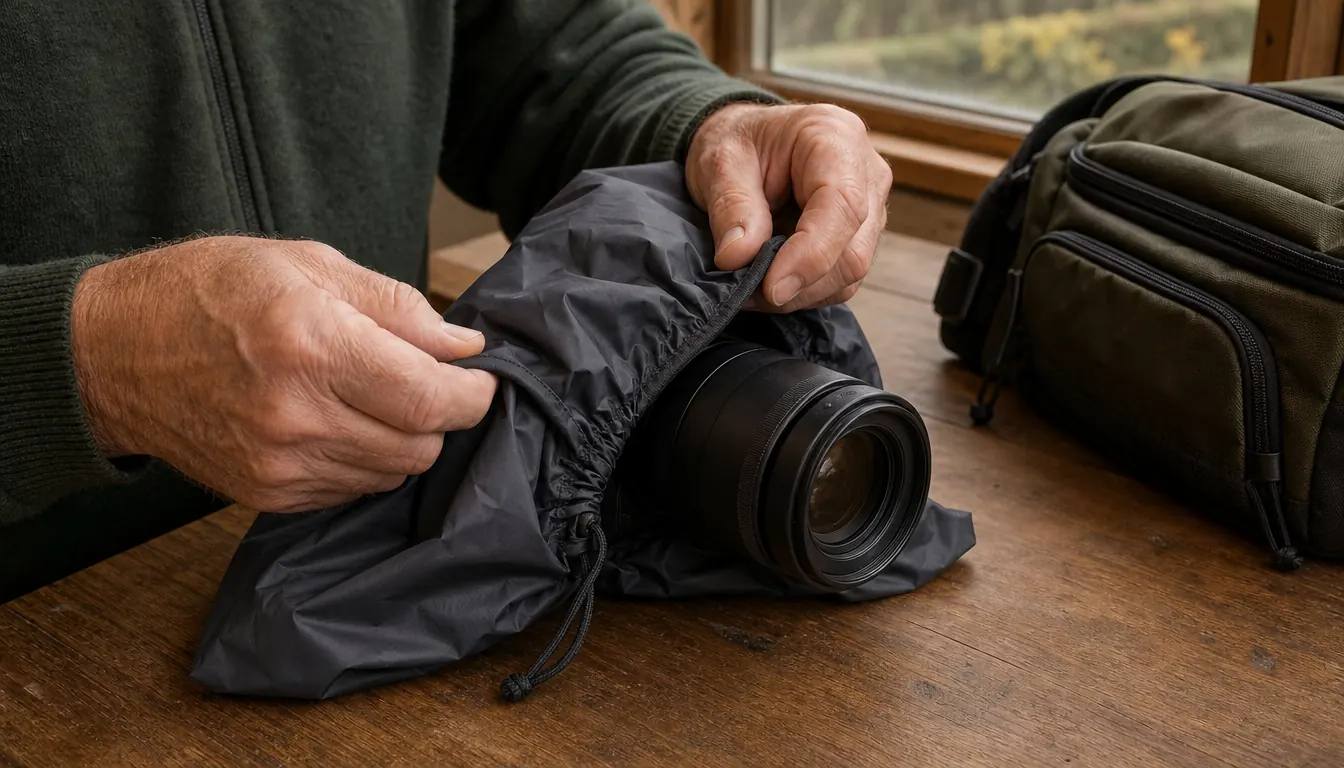
The body of the camera, first. That is the expensive part and the part with seams, ports, and dials that do not love water. The sleeve covers the camera and lens barrel up to the small size limit, and it has an opening for the viewfinder so you can keep your eye to the camera without lifting the cover. I have found that useful when I am tracking a bird at the feeder or waiting for a wave to hit a rock. You are not fumbling with a bag every time you want to check the frame.
The lens barrel is the second thing it protects. My 24-105mm is not huge, so it fits inside the small sleeve with room to spare. My 70-300mm is longer, and this is where the 8 inch length limit matters. The sleeve will cover the back of the lens and the mount, but if you have a long telephoto extended, you need to think about how much barrel is actually inside the cover. I use the sleeve mostly with the 24-105mm for that reason. For birds, I tend to shoot from under the eaves on my lanai or wait for a dry gap.
The third thing it protects is your willingness to keep shooting. That sounds soft, but it is real. A camera that stays in the bag because you are worried about rain takes zero photos. A camera with a 27.22 g sleeve over it takes some photos. Some is better than zero.
What It Does Not Protect
The front element. This is the one nobody tells you clearly enough. The sleeve covers the camera and lens barrel, but the front glass still faces the weather. If you point the camera up at a waterfall, rain will hit the filter or the front element. If you are shooting into mist, the front glass will get misted. You still need a microfiber cloth, and you still need to check the front of the lens before you press the shutter. The sleeve is not a sealed box.
It does not protect against drops, bumps, or a camera tipping off a rock. It is a soft plastic sleeve, not a case. It will not save a lens if you swing your bag into a railing. It also does not protect the camera from sand or dust the way a hard housing would. The listing calls it a rain and dust sleeve, and it does help with blowing mist and light dust, but I would not take it to a windy beach and expect it to keep every grain out.
It does not make your camera waterproof. The listing has one field that says waterproof and another that says water resistant. I trust the water resistant field more. The sleeve has openings for the viewfinder and the lens, and those openings are not sealed. It keeps rain off. It does not make the camera safe to dunk.
The viewfinder opening is useful, but it is worth knowing what it feels like in practice. I wear glasses, and I can keep them on while I shoot because the opening lets me get close to the eyepiece without the material bunching up. That is a small comfort on a wet morning. It also means there is a gap near your eye where mist can drift in. I have not had water pour through it, but I have had to wipe the eyepiece once or twice after a long session. The cover is helping, not sealing.
After forty minutes of steady rain at Rainbow Falls, the camera body was dry. The front element was not. That is the whole trade.
The Fit Question: Small Size, Real Limits
The small size fits any camera and lens setup up to 4.5 inches in diameter and 8 inches long. That is the spec, and it is worth measuring your setup before you buy. My camera with the 24-105mm fits. My camera with the 70-300mm at full extension is a different story. The sleeve will go over it, but the length gets tight and the front of the lens is closer to the edge of the cover. If you shoot with a long lens and a lens hood, this small size may not be the right choice. This listing is the small two-pack, so check the sizing before you assume it will fit.
The sleeve is soft and foldable. That is good for packing and less good in wind. On a gusty morning at Onomea Bay, the loose material flapped against the lens hood and I had to hold it with one hand while I shot with the other. That is not a defect exactly. It is what a soft sleeve does. A fitted rain jacket with cinched openings would handle wind better. I have never owned one. I have seen a friend's at camera club, and it is a different tool with a different job.
The two-pack is the quiet advantage. I keep one sleeve in the sling bag and one in the drawer with my cleaning kit. If one gets muddy or torn, I have a spare. If a friend forgets a cover, I can hand them one. Over 22 months, I have not torn one, but I have been glad to have the second sleeve when the first was drying on the lanai.
What I Liked
- Folds flat and weighs 27.22 g, so it stays in the bag
- Covers the camera body and lens barrel while leaving the viewfinder usable
- Two sleeves in the pack, one for the bag and one for a spare
- Lifetime warranty against defects in materials and workmanship
- Easy to see the top controls through the material
Where It Falls Short
- Front element stays exposed to rain and mist
- Small size tops out at 4.5 inches in diameter and 8 inches long
- Soft material flaps in wind
- Not a hard case, so no drop protection
- Listing uses both waterproof and water resistant, which is confusing
The Two-Pack Detail Nobody Mentions
A two-pack sounds like a marketing bundle. In practice, it solves a real problem: the sleeve is small, light, and easy to lose. I have not lost one, but I have set one down on a rock at Akaka Falls and walked ten feet before I remembered. Because there is a second one at home, losing one would be annoying, not a disaster. That is a small thing. It is also the kind of small thing that determines whether a tool stays in your routine.
The second sleeve also lets me keep one with the cleaning kit and one in the bag. My cleaning kit lives in my desk drawer at home, and my sling bag lives by the door. If I am shooting food at the kitchen table and the window light is fine, I do not need a rain cover. If I am driving to a trailhead and the sky is doing that Hilo thing, I want the sleeve in the bag. Having two means I do not have to remember to move one from place to place. That is not exciting. It is useful.
The storage habit matters more than I expected. After a wet morning, I shake the sleeve out, wipe the inside with a dry cloth, and hang it over the shower rod for a few hours. Then it goes back in the front pocket. I have not had a mildew problem, but I also do not ball it up wet and leave it in a hot car. The material is thin, and a little care keeps it from getting sticky or creased. That is not a product feature. It is just what I do with gear that lives in Hilo humidity.
Rain, Humidity, and Lens Fog
Hilo humidity is its own problem. A rain cover keeps water off the outside of the camera, but it does not stop fog from forming when you move from a cool air-conditioned room to warm, wet air. I have had more fog issues from temperature changes than from rain hitting the camera. The fix for that is patience and a cloth, not a sleeve. If you go from the car with the AC on to a steamy trail, give the camera a few minutes to adjust before you shoot.
The sleeve can actually make fog worse if you wrap a cold camera in it and then walk into warm air. I have not had a serious problem, but I do not leave the camera inside the sleeve for long periods when I am not shooting. I put it on when the rain starts, and I take it off when I get back to the car. That routine has worked for me. It is not a laboratory test. It is 22 months of paying attention.
One more thing about moisture: the sleeve is not a drying device. If your camera is already wet when you put it on, the sleeve will trap that moisture against the body. I made that mistake once at Onomea Bay. I had been shooting without the cover, the camera got misted, and I put the sleeve on without wiping it down first. When I took it off, the camera was damp under the cover. Nothing was damaged, but I learned to wipe the camera and the inside of the sleeve before I pack it away. A rain cover works best on a dry camera.
Who This Is For
This is for the hobby photographer who wants to keep shooting in light to steady rain without carrying a fitted rain jacket or a hard housing. It is for someone with a compact setup, like a mirrorless body and a standard zoom, who wants a cover that folds into a pocket and does not take up space. It is for the person who has been using a grocery bag and a rubber band and is tired of the bag blowing around. If you shoot waterfalls, coastline, gardens, or farmers market mornings in a wet climate, this is a sensible thing to keep in your bag.
It is also for someone who understands the front element is still exposed. If you want a cover that seals the lens and lets you shoot through glass, this is not that. If you want a simple layer between the rain and the camera body, this is that.
And it is for the person who wants a spare. The two-pack is not a gimmick if you shoot often in wet weather. One lives in the bag, one lives at home, and you stop thinking about whether you remembered to pack it.
Who Should Skip It
Skip it if you shoot with a long telephoto and a lens hood most of the time. The small size limit is real. Skip it if you are shooting in blowing sand or heavy surf spray and you need a hard housing. Skip it if you want a fitted cover with cinched openings that stays put in wind. A fitted rain jacket is better for that job, and I say that as someone who has never owned one but has watched a friend use one at camera club.
Skip it if you are looking for drop protection. This is a sleeve. It is not a case. Skip it if you expect the front element to stay dry while you point the camera into the rain. It will not. You still need a cloth and a little judgment.
Skip it if you want a cover that doubles as a camera bag. It does not. It is a thin layer that lives in a pocket. That is the job, and it does the job. It just does not do a different job.
A simple layer for wet mornings, not a waterproof housing
The OP/TECH USA Rainsleeve two-pack is the cover I keep in my sling bag for Hilo rain. Check the small size limits against your camera and lens before you order, and keep a microfiber cloth handy for the front element.
Amazon Check Today's Price on Amazon →