
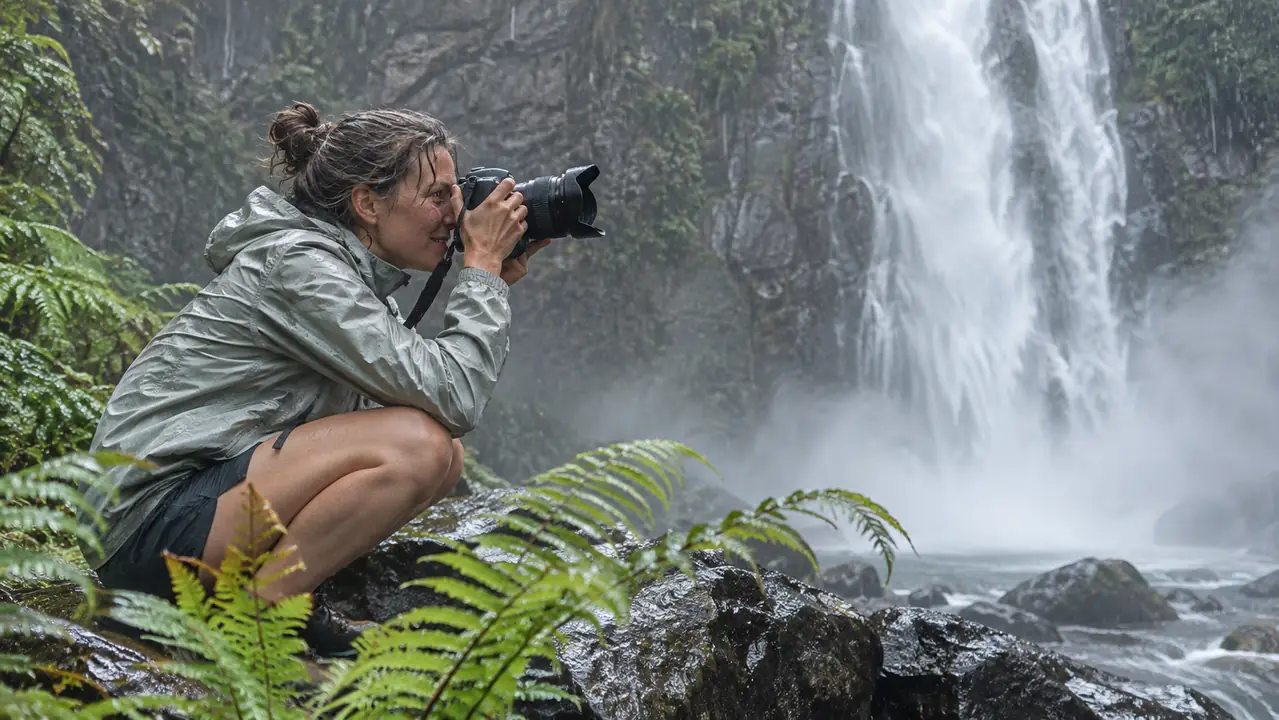
Rain on the windward side of the Big Island does not arrive politely. It comes in sideways, it comes in sheets, and it picks the exact moment the camera is out of the bag and pointed at something worth keeping. I have lost more photos to a sky opening up than to bad light, bad focus and a dead battery combined.
I bought the OP/TECH USA Rainsleeve two-pack in January 2025, after one too many mornings spent wrapping a good lens in a grocery bag and hoping. Twenty-two months later, both sleeves still live folded in the front pocket of my sling bag, which is the most useful thing I can tell you about them. What follows is the rest of it: where they work, where they stop working, and who should not bother.
The Quick Verdict
A soft plastic sleeve that folds flat, weighs about an ounce, and keeps you shooting through drizzle. It is not a sealed housing, and twenty minutes of hard rain is where it stops helping.
Amazon Check Today's Price →The rain cover that lives in a pocket instead of a closet
Two sleeves, folded flat, in a pocket that already had room. Mine have been riding there since January 2025.
Amazon Check Today's Price on Amazon →How I've Used It
My kit is one weather-resistant mirrorless body, a 24-105mm zoom that stays on it most days and a 70-300mm telephoto I bring when I want birds. I shoot for myself, on weekend mornings mostly, and Hilo hands me rain the way other places hand out sunshine. The question was never whether I would shoot in rain. It was whether the camera would come out of the bag at all.
The first real test came on a rainy Saturday at Rainbow Falls in January 2025, the same week the sleeves arrived. I fitted one over the body and lens, walked down to the overlook, and shot for about forty minutes in a steady drizzle while three people under the same railing kept their cameras zipped away. Nothing got wet. Water beaded on the plastic and I could read the screen through it.
Since then it has been to Akaka Falls more times than I can count, down to the tide pools at Onomea Bay, and to a damp Saturday at the Hilo Farmers Market where I spent twenty minutes photographing rain on lilikoi skin. I have used the second sleeve exactly twice, both times while the first was drying on the lanai railing. That is not a knock on the second sleeve. It is what a two-pack is for.
The other place it quietly proved itself was Liliuokalani Gardens on a grey morning when the rain was too light to justify a jacket but heavy enough to spot a front element. I shot for an hour, mostly the stone lanterns and the wet ironwood needles, and the sleeve never once got in the way of the frame. That is the whole job, honestly. Be there, be boring, do not end up in the photo.
What the Rainsleeve Actually Is
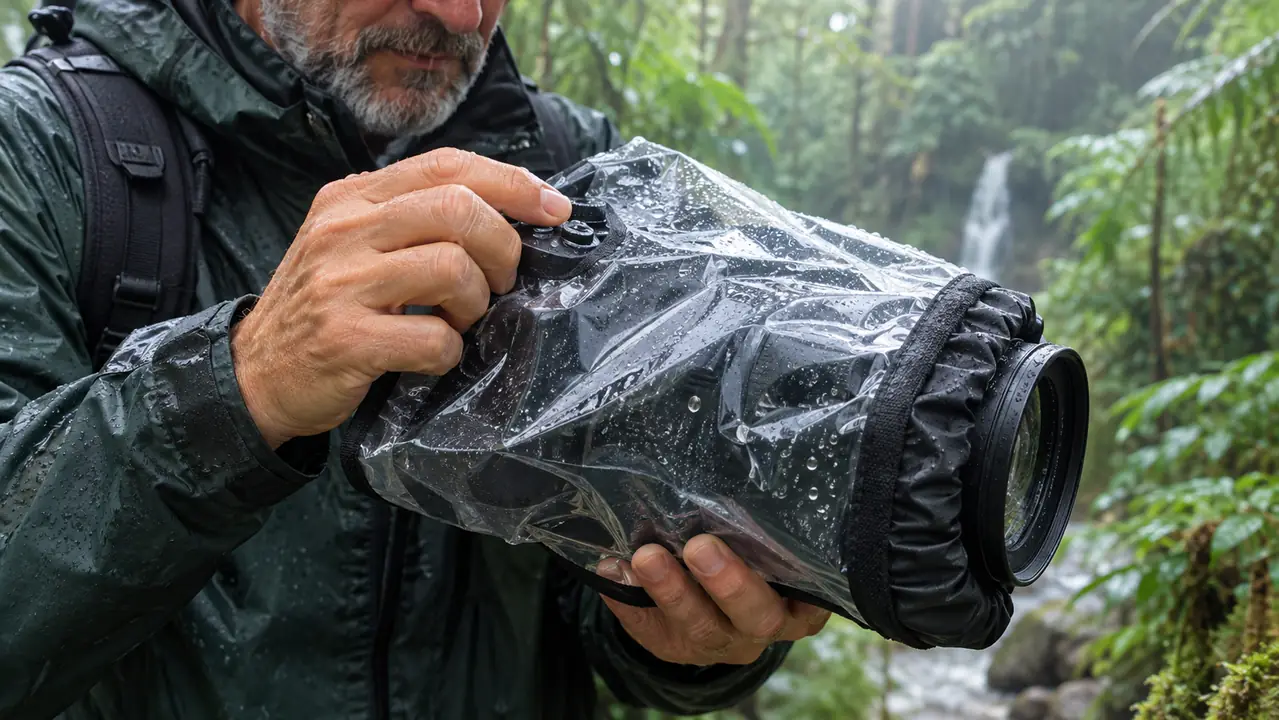
Strip away the packaging and it is a soft plastic sleeve. The listing calls it water resistant rather than waterproof, and after two years I would take them at their word. It weighs 27.22 grams, a hair under an ounce, and it folds down to something you can slide into a pocket without noticing. The small size is cut for a camera and lens up to 4.5 inches in diameter and 8 inches long. My body with the 24-105mm fits with room to spare.
The clear material is the entire design idea. You do not uncover anything to change a setting. You look through the plastic at the dials and the rear screen and you work them through it. There is a cut for the viewfinder, which matters more than I expected, because framing through a wet screen in flat overcast light is guesswork and I am not good enough to guess.
The OP/TECH USA sleeve comes as a two-pack. That reads like a marketing decision until the morning your first one is soaked through and the rain has not stopped.
How It Handles Real Rain
Steady drizzle is where it earns its place in the bag. The kind of rain that soaks your shoulders in ten minutes and leaves the trail greasy underfoot. Water beads on the surface and runs off, and the plastic does not go limp or cling to the lens hood the way a grocery bag does. I shot a full morning at Akaka Falls in that weather and wiped the front element exactly once, out of habit more than need.
A real downpour is a different conversation. Island rain can go from drizzle to firehose in about ninety seconds, and that is where you find the edge of what this thing does. It is water resistant, not sealed. After twenty minutes of hard rain the sleeve itself is wet enough that you start thinking about cover, and you should. I dried the camera with a microfiber cloth back at the car and found nothing where it mattered, but I would not have wanted another twenty minutes of it.
Wind is the part nobody mentions. A soft sleeve in a crosswind flaps against the lens hood, and the flap shows up in your photos as a soft blur along one edge. When the trades are up I tuck the slack under my forearm and the problem goes away. It took three ruined frames at Onomea Bay to work that out, and I would rather you learn it now than find it in your files later.
Two Years Folded in a Bag Pocket
The honest test of any small accessory is whether it survives being carried. Mine has spent twenty-two months in the front pocket of a sling bag that gets set down on lava rock, hung on fence posts and shoved behind the seat of a small SUV. The plastic has creased along the fold lines. It has not cracked, clouded or torn, and it is still clear enough to read a shutter speed through, which is really all I ask of it.
The Rainsleeve is backed by an OP/TECH USA lifetime warranty against defects in materials and workmanship, which I have not needed. Twenty-two months is not a lifetime and I will not pretend to know how it ages over ten years. What I can tell you is that the failure I expected, a split seam or a hole worn through at the corner of the lens hood, has not happened.
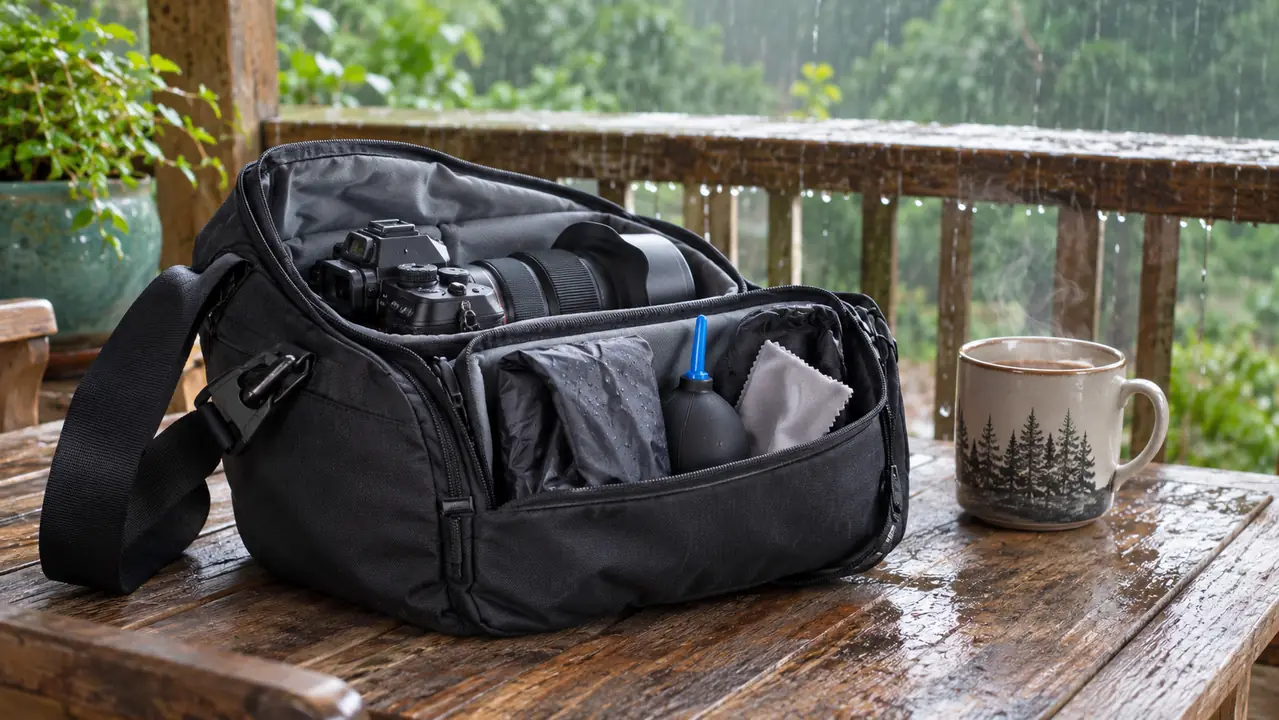
The one thing that has changed is my routine. The sleeves used to live in the main compartment, where they got folded around a spare battery and picked up a hard crease. Now they lie flat in the front pocket next to the blower and a microfiber cloth, and I have not thought about them since. A piece of gear you never think about is a piece of gear that is doing its job.
The Awkward Parts
Working controls through plastic is slower than working them directly. If you are the kind of shooter who moves an autofocus point around the frame with a joystick for every shot, you will feel it. I shoot aperture priority with a single center point and recompose, so it costs me almost nothing. A friend at my camera club who photographs birds in flight tried it for a minute and handed it back.
Lens changes require taking the sleeve off. All the way off. You change the lens under shelter and then put it back on, which in a real shower means retreating to the car or waiting it out. With two lenses that is a small inconvenience. If you are carrying three bodies and swapping constantly, it is not.
There is a small amount of settling at the start of each session. You work the sleeve over the lens hood and smooth the front so the plastic lies flat instead of bunching in front of the glass. The first time it took me two minutes and some muttering. Now it is about thirty seconds, most of which is spent making sure I have not left a fold running across the frame.
And the plastic does not breathe, which matters more in Hilo than it would in Phoenix.
What It Does Not Fix: Fog
Humidity is the harder problem and no sleeve solves it. Cold glass coming out of an air conditioned car into a warm, saturated morning fogs instantly, sleeve or no sleeve. The Rainsleeve keeps rain off, which means the front element stays dry and you are fighting one problem instead of two. It does not stop condensation from forming inside your lens, and nothing short of a sealed housing will.
My routine is to leave the camera in the bag for the first ten minutes after I park so the glass comes up to ambient temperature slowly, then wipe the front element with a microfiber cloth before the sleeve goes on. The blower gets used at the end of the day, not during. That is lens care, not a feature of the rain cover, but the two habits belong together and I would not trust either one on its own.
How It Compares to What Else Is Out There
I have never owned a fitted camera rain jacket. A friend at my camera club does, and I have handled it. It is a stiffer, tailored thing that goes on faster, stays put in wind and does not flap. It also takes up real space in the bag and it costs meaningfully more. If I were shooting for someone else and standing in weather for hours at a time, I would own one and not think twice. As a hobbyist who gets out two or three rainy mornings a month, the tradeoff does not favor it.
The grocery bag I used for years is the honest baseline, and the Rainsleeve is the same idea with the problems solved. The bag fogs, crinkles against the lens hood, hides the controls so you have to pull it off to change a setting, and the rubber band gives out at the worst possible moment. It works for about five minutes. This works for a morning, provided the morning is drizzle and not a storm.
What I Liked
- Folds flat into a bag pocket and weighs 27.22 grams, so there is no reason to leave it at home
- Clear plastic means you can read the screen and find the dials without uncovering the camera
- The viewfinder cut lets you frame the way you normally frame
- Two per pack, so one can dry on the railing while the other works
- Handles steady drizzle at waterfalls and the coast without drama
- Lifetime warranty against defects in materials and workmanship
Where It Falls Short
- Water resistant, not sealed. Twenty minutes of hard rain is about the limit before you want shelter
- Working dials through plastic is noticeably slower than working them directly
- Lens changes require taking it off entirely
- Loose material flaps in a crosswind and softens one edge of the frame
- The small size tops out at 8 inches, so a long telephoto deserves a test fit first
I shot forty minutes of steady drizzle at Rainbow Falls while three people under the same railing kept their cameras zipped away.
Who This Is For
You shoot for yourself. One body, one or two lenses, a Saturday morning free and a forecast you have learned to ignore. You have already had the morning where the rain started, you put the camera away, and the light got interesting ten minutes later while you were walking back to the car.
It also suits anyone in a humid place where rain arrives without warning. The windward side of any island, the Pacific Northwest, a Florida afternoon in July. At 27.22 grams and folded flat, there is no calculation to make about whether it earns its small patch of pocket.
And it suits people who are still learning. If you are stepping up from a phone camera, the last thing you need is to be frightened of weather. A sleeve in the bag removes one reason to leave the camera at home, and leaving the camera at home is the actual reason most people stop improving.
Who Should Skip It
If your hands are on the controls constantly, this will frustrate you. Birds in flight, sport, anything with a moving subject and a moving autofocus point. The plastic adds a beat of delay to every adjustment, and that beat is exactly the one you need back.
If you change lenses often in the field, or if you are regularly out in sustained hard rain for hours, save for a fitted jacket or a proper housing. The Rainsleeve is a pocket-sized answer to a passing shower. It is not monsoon gear, and OP/TECH USA does not claim otherwise on the listing.
A flat slip of plastic beats a wet camera every time
Mine has ridden in the front pocket of a sling bag for twenty-two months, and I notice immediately on the rare day it is not there.
Amazon Check Today's Price on Amazon →