
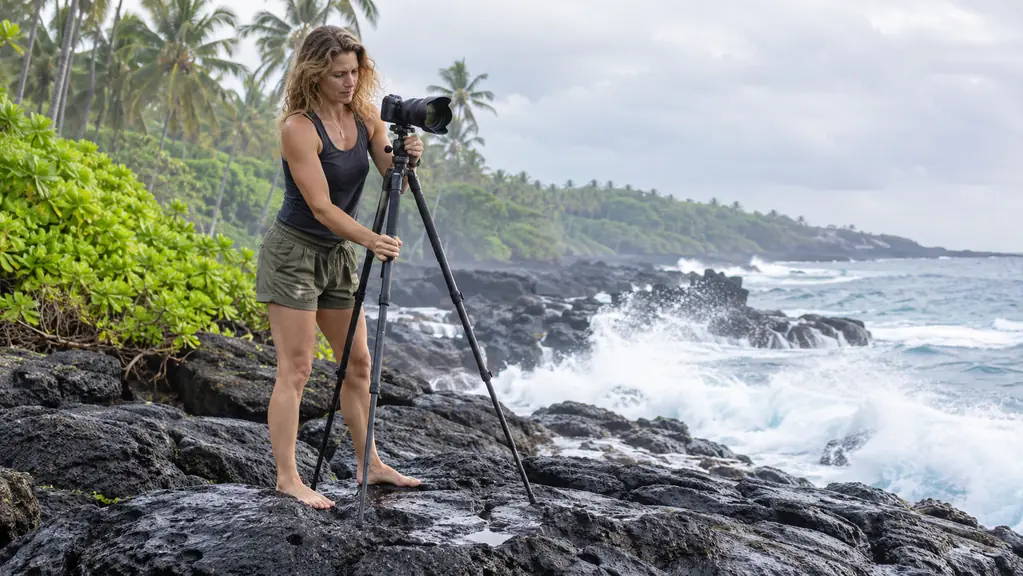
Short answer first. If you want one tripod that holds still through a thirty second exposure at a waterfall and still fits behind the seat of a small SUV, the Neewer N55C is the one I would buy again. If the tripod is an afterthought, something you toss in a daypack and pull out twice on a trip, an aluminum travel tripod does that job and does it with less fuss. I have carried the Neewer for about twenty months. I have never owned an aluminum tripod, and I will be straight with you about where that limits what I can say.
Here is the shape of my shooting, so you can tell whether any of this applies to you. I live on the windward side of the Big Island, where it rains most weeks and the salt air gets into everything that is not sealed. My tripod work is almost all long exposures: the water at Rainbow Falls when it is running, the rocks and tide pools at Onomea Bay, the coastline in early light. I shoot one weather resistant mirrorless body with a 24 to 105mm zoom for nearly everything and a 70 to 300mm for the birds at my feeder. The tripod decides whether some of those frames exist at all, so I pay attention to how it behaves rather than how it reads on a spec sheet.
| Neewer N55C | Aluminum travel tripods | |
|---|---|---|
| Weight at full height | 1.6 kg and it still opens to 66 in / 168 cm | Usually heavier for the same height, since the alloy tubes carry the weight |
| Folded length | 22.6 in on four leg sections | Some models use five sections and pack shorter |
| Monopod leg | One leg unscrews and works as a monopod | Rare on the budget aluminum models I have handled |
| Salt air and humidity | Carbon tubes do not rust, though the fittings still need drying | Alloy legs can pit and collars can stiffen if packed away wet |
| Adjusting the head | Two locks plus a 360 degree dial for panning | Varies widely, and several I have handled use one knob for everything |
| Rough handling | Strong and light, but I still wince when it knocks a railing | Dents and scratches and keeps working, easy to shrug about |
| Warranty | 1 year from the manufacturer | Varies by brand, often 1 year or less on the ones I looked at |
| Setup speed | Four leg sections means three collar locks to undo per leg | Fewer sections on some models means fewer locks to undo |
| Best for | Long exposures at waterfalls and the coast in humid weather | Travel where the tripod is an afterthought in a light kit |
Where the Neewer N55C Wins
The weight is the whole argument, and everything else is a detail. The N55C is 1.6 kg and it still opens to 66 inches, which is 168 centimeters. Before I bought it in March 2025 I was bracing the camera on lava rock and railings, which works right up until the moment it does not. What changed when the tripod arrived was not only that I had a steadier platform, though I did. What changed is that carrying it stopped being a decision I had to make at the trailhead. It rides over my shoulder on its strap on the way to Akaka Falls, and I still have both hands for the camera and the rain sleeve. The first Saturday I took it out I walked the paved path to Rainbow Falls in light drizzle, set it up on the overlook, and shot the falling water at twenty seconds with the zoom stopped down. Then I packed up and walked back to the car in under ten minutes. That last part matters more than the file it produced. With a heavier tripod I would have thought twice about the walk for one frame.
Second is the leg that unscrews and turns into a monopod. I assumed I would never use it, and I was wrong. I use it at the Hilo Farmers Market, where a full tripod in a crowd is slow to set up and rude to everyone around you, and I use it on the lanai when I am waiting on a bird with the telephoto all the way out. It is one leg and the same ball head, and for those two jobs that is plenty. Four leg sections is what gets the whole thing down to a folded 22.6 inches, short enough to ride in the back seat without a fight.
Then there is the salt air. Carbon fiber does not rust, which sounds like a line from a brochure until you have watched an alloy fitting go chalky after a season on this side of the island. The listing describes the tubes as eight layer carbon fiber, laminated at staggered angles, and I cannot verify the layering by looking at it. What I can tell you is that twenty months of wet mornings, dried off with the same microfiber cloth that lives in my sling bag, has left the tubes and the leg collars looking like the week I unboxed it. The metal fittings still need drying after a wet shoot. That is true of every tripod I have handled, including the aluminum one I will get to.
The head has held up better than I expected. Two locks, one for the ball and one for the pan, plus a 360 degree dial that lets me swing the camera to a new angle without loosening anything else. On a waterfall frame, where I am nudging the composition a few degrees between thirty second exposures, that is worth more to me than the leg material. I stop thinking about the head while I am shooting, which is the highest thing I can say about a piece of gear.
Twenty months of wet mornings and the tubes and collars still look new. The fittings need drying after every shoot. That is the honest version of a carbon fiber tripod in Hilo.
Where Aluminum Travel Tripods Win
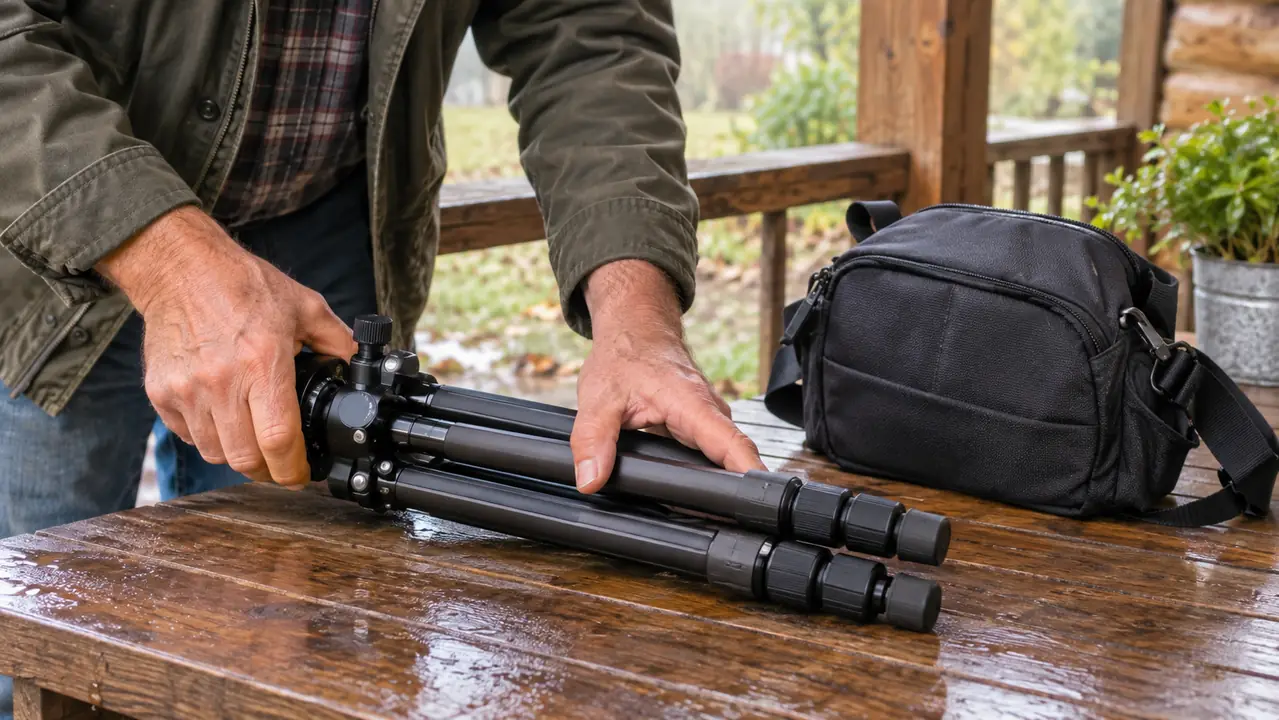
Folded length, for one, and I am not going to pretend otherwise. Some aluminum travel tripods break down into five leg sections instead of four, and they pack shorter than the 22.6 inches this one folds to. If your entire kit is a sling bag and you want the tripod to vanish inside it, that is a real advantage. Mine does not fit in the sling bag. It rides in the back seat of the SUV or over my shoulder, and if I were flying with carry on only, I would think harder about the shorter option.
Forgiveness is the other one. A friend at the camera club has an aluminum travel tripod that has been leaned against lava rock, set down in wet sand at Onomea Bay, and left in a hot car more times than either of us can count. It has dents and scratches and it works exactly like it did the first month. Carbon fiber is strong and light, but it is not indifferent to bad treatment the way a cheap alloy leg is, because a cheap alloy leg is a part you can shrug about. I wince when mine knocks against a railing. He does not. I handled his on a breezy morning at Liliuokalani Gardens with the center column down, and it stood perfectly still for the frames I took. It is heavier than mine, and I felt that on the walk back in from the parking lot. That weight is the trade he made.
And here is the part that does not make it into comparison tables. For most of what a hobby photographer shoots, the tripod is the difference between a sharp frame and a blurry one. It is not the difference between carbon and aluminum. Wind at full height, a head that creeps under a telephoto, legs that flex when someone walks past on a wooden boardwalk: those are the things that cost you the shot. A decent aluminum tripod that is with you beats a carbon one you left at home, every single time, and I would rather say that out loud than sell you on tube material.
If the waterfall shots are the reason you want a tripod, start here
The N55C is 1.6 kg and opens to 66 inches, with a monopod leg and a ball head I can reframe in a couple of seconds. Twenty months of wet mornings and it still does what it did on day one.
Amazon Check Today's Price on Amazon →What the Spec Sheet Actually Means
The 66 inch number is the working height, and that is the one worth comparing. Plenty of listings quote a maximum with the center column all the way up, which is a number that makes a tripod feel less steady the moment a breeze arrives. At 66 inches the camera sits above my standing eye line, which matters when I am on a slope at Onomea Bay and want to shoot down at the tide pools. The minimum height of 57 centimeters lets me drop it low to the wet rock without lying down in it.
1.6 kg is roughly a filled water bottle and a half, and over a mile of trail that is the difference between bringing it and not. 22.6 inches folded on four leg sections means three collar locks to undo per leg when I set up, and I count that as the price of the smaller folded length. A five section tripod packs shorter and takes longer to stand up. Neither arrangement is wrong. They are two different trades, and the listing will not make the trade for you.
I timed the setup once out of curiosity, on the lanai, with the phone propped against a mug. Forty seconds from closed to standing at full height. Closer to a minute if I am being careful about leveling on uneven ground, which is what the wet rock at the coast always is. That is not a complaint and it is not a boast. It is the number I would want in front of me if I were choosing between four sections and five, because you pay for the shorter pack every time you set up, not once.
The warranty is one year from the manufacturer, which is the normal shape of these things and worth knowing before you assume anything longer. It covers the tripod doing something wrong on its own, not the tripod doing something wrong because it went off a rock. Mine came with a portable bag. The bag holds the tripod, the strap and nothing else: no pocket for a plate, no divider, no rain cover. It lives in the hall closet and gets used for storage and the drive to the trailhead, and that is the whole of its job.
What I Liked
- 1.6 kg for 66 inches of working height, so I stopped leaving it at home
- One leg unscrews into a monopod for markets, crowds and feeder waits
- Carbon tubes and collars have shown no salt air damage in twenty months
- Ball head has two locks and a 360 degree dial, quick to reframe between long exposures
- Folds to 22.6 inches on four leg sections and ships with a carry bag
Where It Falls Short
- 1.6 kg is light for a tripod and still too much for a sling bag
- It does not fit a small camera sling, so it rides in the car or on my shoulder
- Carbon does not make it immune to wind at full height, and I have not tested it in a gale
- The included bag is basic and I never take it on the trail
- One year manufacturer warranty, and a damaged tube is not a home repair
How I Compared Them
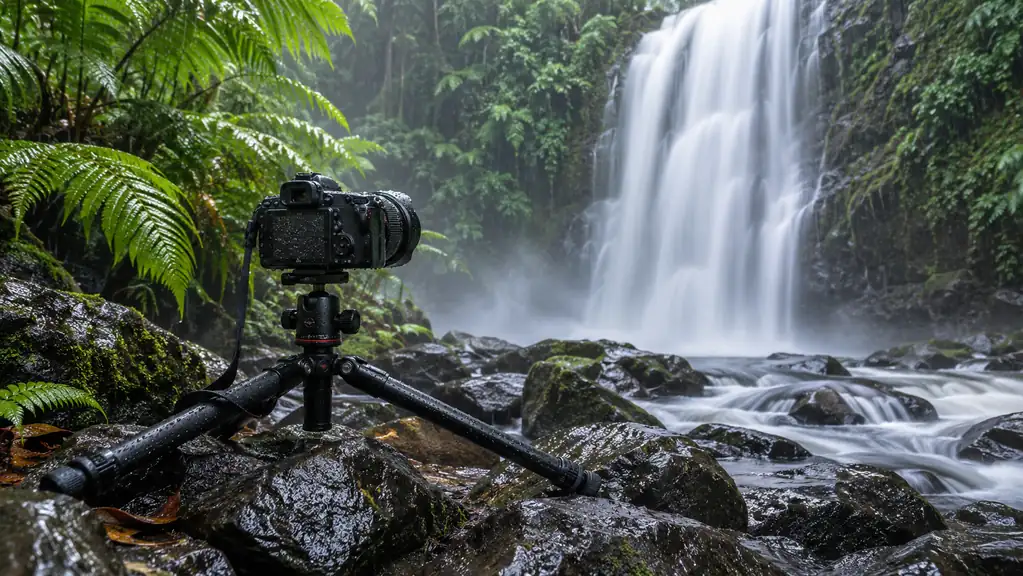
I want to be honest about my evidence. I bought the Neewer myself in March 2025, new, and it is the first and only tripod I have ever owned. The aluminum side of this comparison comes from two places: a friend at the camera club whose tripod I have handled on a couple of outings, and the listings and reviews I read before I bought mine. That is an afternoon and a stack of reviews, not twenty months. Weigh it that way. I did read the three star reviews on the aluminum models before I bought anything, looking for the same complaint repeated. What came up most was collars that stiffened in cold and legs that flexed under a long lens, which matched what I felt handling my friend's on two trips to Liliuokalani Gardens and one wet morning at Onomea Bay.
What I could not test is the long haul. I cannot tell you how an aluminum travel tripod holds up over two years of Hilo humidity, only how my friend's has in the same weather, which so far is fine apart from some cosmetic damage. I also did not test either type at full height in a strong wind, because I do not shoot in a strong wind if I can help it. If wind is your normal condition, get advice from someone who shoots on a ridge.
Who Should Buy Which
Buy the Neewer N55C if your tripod work is long exposures at waterfalls, coastline and tide pools, if you live somewhere humid, and if the reason you do not own a tripod yet is that you did not want to carry one. This one is 1.6 kg, it opens to 66 inches, and the monopod leg earns its place at markets and in crowds. Twenty months in, I would buy it again with my own money, which is the only review standard I really trust.
Buy an aluminum travel tripod if the tripod is a small part of a light kit, if you want it to fold shorter than 22.6 inches, and if you want to lean it in sand and set it down on rock without thinking about it. If you shoot a handful of long exposures a year on trips and the rest of the time it lives in the car, the easier-to-shrug-about option is the sensible one. The photos you take with the tripod you brought will beat the ones you did not.
Twenty months on, this is still the tripod that comes with me
Carbon tubes that have shrugged off Hilo humidity, 66 inches of height at 1.6 kg, and a monopod leg I use more than I expected. If your shooting looks like mine, start here.
Amazon Check Today's Price on Amazon →