
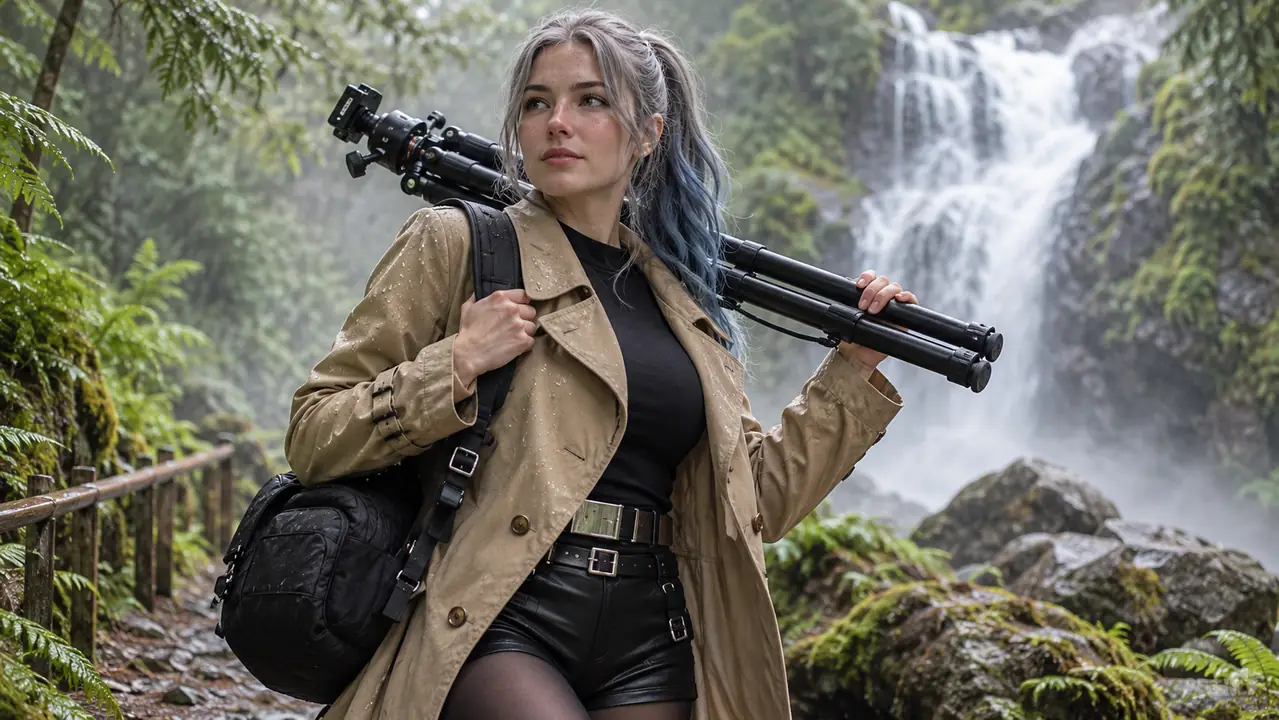
The first thing I noticed about the Neewer N55C was not the carbon fiber. It was how often I left it in the hall closet. I bought the Neewer N55C in March 2025, after a Saturday at Onomea Bay where I braced my camera on a lava rock for a long exposure and still got a soft frame. The tide was moving, the light was fading, and I had no way to hold the camera still. I had been shooting for about twelve years at that point, always handheld, always telling myself a tripod was for people with more patience than me. Twenty months later, I know the N55C is not a piece of gear that fixes everything. It is a tall, light, carbon fiber tripod that solved one specific problem for me, and created a few smaller ones I had to learn to work around. That is the honest version.
What nobody tells you about a first tripod is that it changes your shooting rhythm before it changes your photos. The Neewer N55C is the only tripod I have owned. I am not going to pretend I have tested a dozen models or that I can tell you how it compares to every travel tripod on the market. I can tell you what it is like to carry this one on rainforest trails, set it up in mist, use it on the coast, and bring it home to a humid house in Hilo. I can tell you where it helps and where it gets in the way. If you are a hobby photographer stepping up from handheld shots, that is probably the information you actually need.
The Quick Verdict
A genuinely useful first tripod for tall, steady landscape shots, as long as you can live with the folded length and a ball head that is not built for smooth video.
Amazon Check Today's Price →The Neewer N55C solved my blurred waterfall problem, not every camera problem
If you mostly shoot stills and need height without a heavy pack, this is the model I would start with. Check the current listing and confirm the folded length fits how you carry gear.
Amazon View the Neewer N55C on Amazon →How I've Used It
I shoot on Saturday mornings when I can, usually alone. My routine is simple: I put the tripod in the back seat of my small SUV, drive to a trailhead, and carry the tripod by hand or over my shoulder on its strap. It does not fit in my camera sling bag, so the tripod is always a separate item. I have used it at Rainbow Falls, Akaka Falls, Onomea Bay, Liliuokalani Gardens, the Hilo Farmers Market, and at home on the lanai and at the kitchen table. The places I shoot most are wet and bright at the same time, which is a good test for any tripod. I have used the Neewer N55C for about twenty months, and it has held up without any repair.
The first real test was a rainy morning at Rainbow Falls. I set up under the trees, extended the legs, and used a 4 second exposure on the moving water. The tripod did its job. The rain did not care. I wiped the legs down with a towel when I got home and left the whole thing open in the hall to dry. That has become my routine after every wet shoot. The N55C is not a sealed piece of gear, and I do not treat it like one. It is carbon fiber, it is light, and it has survived twenty months of Hilo humidity because I dry it instead of leaving it in the car.
At home, I use it for food photos at the kitchen table and for the cats when they sit by the window. Pika, my seven year old gray tabby, walks into every frame, so I have learned to frame wide and wait. Mochi, my four year old black cat, is harder to expose for, and the tripod lets me take a few frames at the same angle while I adjust exposure. That is not a glamorous use, but it is real. A tripod that lives in a closet and comes out for a waterfall once a month is less useful than one that also gets used for a bowl of soup on a rainy Tuesday.
Weight and Folded Length Are the Real Story
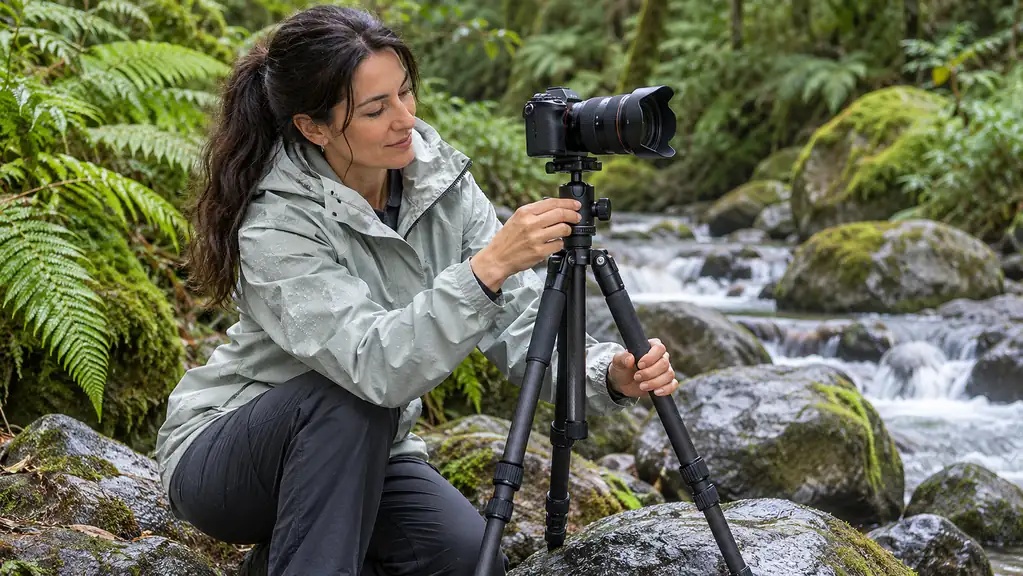
The N55C weighs 1.6 kg. On paper that sounds light, and in practice it is light enough that I notice it less than a full water bottle and a sandwich in my daypack. The folded length is 22.6 inches, and that is the number I underweighted before I bought it. It is not huge. It is also not pocketable. It does not fit in my camera sling bag, so I carry it by the strap or over my shoulder. If your whole plan is to carry one small bag on a trail, this tripod changes that plan. If you are willing to carry a separate item, the weight is easy to live with.
The carbon fiber legs feel stiff when I extend them, and the whole tripod has a solid feel that I did not expect from a first tripod. Neewer says the tubes use eight layers of carbon fiber, and I cannot verify the layup from the outside. I can say that after twenty months of use, the legs do not wobble at the joints when I lock them down. I have not had a leg collapse or a section slip. I have had to clean grit out of the joints after a muddy morning at Akaka Falls, which is normal for any tripod that goes outside. The carbon fiber is not a magic material. It is a light material, and light is the point.
The included bag is useful for storage in the hall closet and for keeping dust off the tripod between shoots. I would not call it a hiking bag. It is a simple carry bag for the tripod, and that is all I use it for. The tripod lives in that bag at home, and when I take it out I leave the bag in the car. If you want one bag for camera, lenses, and tripod, this is not that bag. If you want a place to keep the tripod clean and out of the way, the included bag does the job.
Height, Leg Sections, and Setup Time
The N55C goes from 57 centimeters at its lowest to 168 centimeters at full height, or about 66 inches. I am 5 foot 6, and at full height the ball head sits above my eye level. That is a comfortable place for landscape work because I am not hunched over the camera. It is also tall enough that I rarely use the full height in wind. At Onomea Bay I usually set it lower and bend a little. The minimum height of 57 centimeters is not low enough for ground level macro work. If you want to photograph a mushroom at eye level, this is not the tripod for that job. For waterfalls, coastline, and food, the height range is right.
Four leg sections mean three joints per leg. That is more sections than a simple travel tripod with three sections, and it means more locks to check before you walk away from the camera. The upside is a folded length of 22.6 inches, which is shorter than a three section tripod of the same height. I count the sections as I extend them. It sounds fussy, but it saves me from getting one leg short and having to redo the setup. In rain, I rehearse the order: extend the legs, set the height, mount the camera, then loosen the two ball head locks and turn the 360 degree dial. Setup takes me under a minute if I am not rushing.
The tripod is not instant. If you are used to a phone on a tiny tripod, the N55C will feel like a piece of furniture. That is the trade for height and stability. I have missed a few quick shots while setting up, especially when a bird lands at the feeder and I am still extending the legs. For the shots I care about, the ones where I want a long exposure or a careful composition, the setup time is part of the process. If you need to move fast and shoot handheld, keep the camera in your hand and leave the tripod in the car.
What the Ball Head Does Well and Where It Fights You
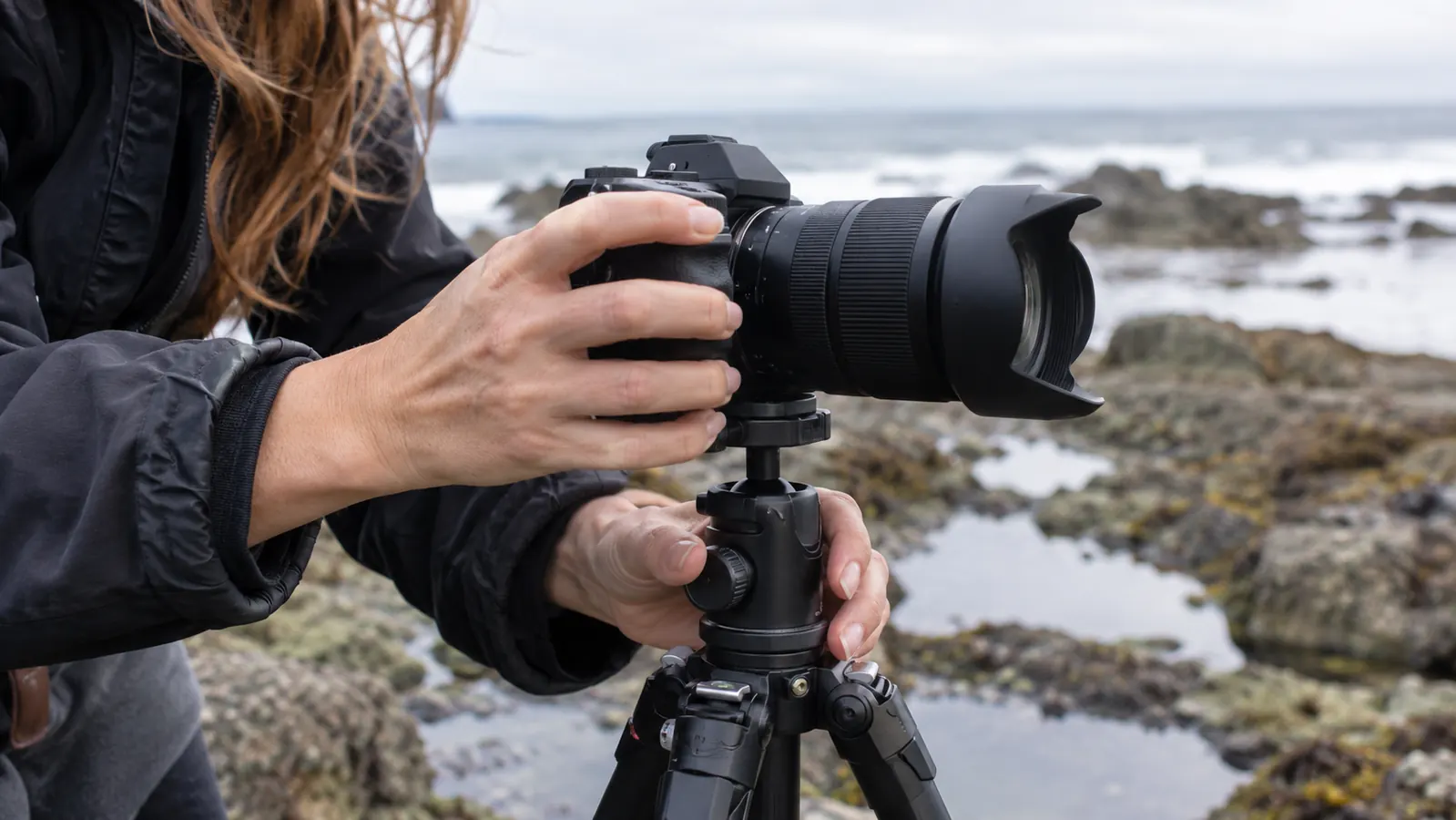
The ball head has two locks and a 360 degree dial. For stills, it is fine. I loosen the main lock, aim the camera, and tighten. The separate dial lets me rotate the camera without changing the tilt, which is handy for panoramas at Liliuokalani Gardens. I do not need a geared head for the photos I take. I need to point the camera, lock it, and take the shot. The N55C ball head does that. It is not a precision instrument for architectural photography, and it is not a fluid head for video. It is a simple ball head that works for landscape and tabletop stills.
Where it fights you is video. A ball head is not a fluid head. If you plan to pan smoothly while recording, you will feel the difference. The motion is not as smooth as a dedicated video head, and the two locks are made for holding a position, not for making a slow, even turn. I shoot stills, so this is not a dealbreaker for me. If you are buying a tripod for video, look for a fluid head instead. That is not a knock on the N55C. It is the wrong tool for that job, and nobody at Neewer is hiding it. The listing calls it a ball head, and a ball head has limits.
The ball head also has a limit with a long lens. With my 70-300mm lens, I can feel the head settle after I tighten it. I give it a second look before a long exposure. It has held every time, but I would not hang a much heavier setup on it and expect the same result. If you shoot with a large telephoto and a heavy body, this is probably not the head for you. If you shoot with a standard zoom or a small prime, the head is more than enough. I use my 24-105mm most of the time, and that combination feels balanced.
In Rain, Humidity, and Wind
Hilo is wet. I do not treat the N55C as a sealed tripod because Neewer does not list a weather rating for it. Carbon fiber does not rust like steel, but grit and water still get into the joints. After a wet shoot, I wipe the legs with a towel, extend them, and let the tripod dry open in the hall. I do not put it away wet. That one habit has probably done more for the tripod than any feature. If you live somewhere dry, you can ignore most of this. If you live somewhere humid, you cannot. The N55C has handled the humidity well as long as I do my part.
Humidity is the quieter problem. I store the tripod in its bag in the hall closet, and I leave the bag open when I can. I do not leave it in the car. The car gets hot, then cool, then damp, and that is how mold starts. I have not had mold on the N55C, but I have had it on a camera strap, and that was enough of a lesson. The tripod is easy to wipe down because the legs are smooth and the joints are accessible. I use a dry microfiber cloth and a little patience. That is the whole maintenance routine.
Wind at the coast is where a tall tripod can feel like a sail. At 66 inches, the N55C catches gusts that a lower tripod would ignore. At Onomea Bay I shorten the legs and keep a hand on the ball head while the exposure runs. I have not had it tip, but I have had to wait out gusts. If you shoot on an exposed coast, plan for wind. The carbon fiber is light, and light is a trade. A heavier aluminum tripod might feel more planted in wind. I have not owned one, but I have handled a friend's aluminum tripod at camera club, and it felt heavier in a way that would matter on a windy day. It would also be heavier on the trail.
Monopod Mode and the Bag
One leg can be used as a monopod. I have used this twice, both times at the Hilo Farmers Market when I wanted more stability than handheld but did not want to set up three legs in a crowd. It works. It is not as steady as the full tripod, and I would not use it for a 4 second exposure. It is a useful option to have, especially if you are traveling and want one tool that can do two jobs. The monopod mode is one of the reasons I chose the N55C over a simpler tripod. I do not use it every week, but I am glad it is there.
The bag is simple, and I have already said it does not fit in my sling bag. What I will add is that the bag makes the tripod easier to store and easier to carry over your shoulder without the legs catching on branches. It is not a padded travel case. It is not going to protect the tripod in checked luggage. It is a dust bag with a strap. For my use, that is enough. The tripod lives in the bag in the closet, and the bag goes in the car on Saturday. If you need more protection, you will need a different case.
What Nobody Tells You About a First Tripod
A tripod makes you slower. That is the point, and it is also the complaint. You will miss shots while you set up. You will look at the light differently because you have to commit to a spot. The N55C does not make a bad composition good. It does not make a boring subject interesting. What it does is let you take the photo you already know you want without the camera moving. For me, that was worth the trade. I plan my Saturday mornings around a few shots instead of trying to catch everything. The tripod fits that rhythm.
The second thing nobody tells you is that height is not always your friend. At 66 inches, the N55C puts the camera at a comfortable height for landscapes, but it also catches wind and makes the whole setup more visible. At the coast, I often use it lower. At the farmers market, I use it lower so I am not blocking people. At home, I use it higher for food photos. The adjustable height is useful, but you have to think about where you are. A tall tripod is not automatically a better tripod. It is a tool with a range, and you choose the height for the scene.
The third thing is that a tripod is a commitment to carry something. If you are not willing to carry 1.6 kg and a 22.6 inch package, you will leave it at home. I know because I have left it at home. The days I carry it are the days I plan to shoot slowly. The days I do not are the days I shoot handheld and accept the limits. That is not a failure of the tripod. It is the reality of any gear. The best tripod is the one you actually bring, and the N55C is light enough that I bring it more often than I expected.
What I Liked
- 1.6 kg carbon fiber build is light enough to carry on a morning trail
- Full height of 168 cm, about 66 inches, puts the camera at a comfortable eye level
- Four leg sections fold to 22.6 inches and fit the included bag
- One leg converts to a monopod for farmers market and travel days
- Ball head has two locks and a 360 degree dial for quick stills adjustments
- One year manufacturer warranty
Where It Falls Short
- 22.6 inch folded length does not fit a small camera sling bag
- Ball head is not a fluid head for smooth video pans
- No weather rating listed, so I dry it after every wet shoot
- Four leg sections mean more joints to check in rain
- 57 cm minimum height is not low enough for ground level macro work
- At full height it catches wind at the coast
At Onomea Bay I can now hold a 4 second exposure without bracing the camera on a railing, and that is the only reason I bought the Neewer N55C.
Who This Is For
If you are a hobby photographer who shoots landscapes, waterfalls, food, or pets and you have been bracing your camera on rocks, the N55C is a sensible first tripod. It is tall enough for eye level work, light enough to carry on a Saturday trail, and simple enough that you do not need a video rig to understand it. It suits someone who shoots alone, works slowly, and wants one tripod that can live in a closet and come out for the weekend. It also suits a photographer who wants a monopod option without buying a second tool. If you are stepping up from a phone camera and want to learn long exposures, this is a forgiving place to start.
Who Should Skip It
Skip the N55C if you need a tripod that disappears into a small sling bag. Skip it if you shoot video and need smooth pans, because a ball head is the wrong tool. Skip it if you want a weather sealed tripod with a published rating, or if you need to get the camera down to ground level for macro work. And skip it if you know you will not carry 1.6 kg, because the best tripod is the one you actually bring. None of these are flaws in the N55C. They are mismatches between the tool and the job. A honest review should tell you both.
One tripod, one clear job: hold the camera still when the light gets low
If that job matches yours, the Neewer N55C is the model I have used for twenty months. Confirm the folded length and the ball head limits before you buy.
Amazon View the Neewer N55C on Amazon →