
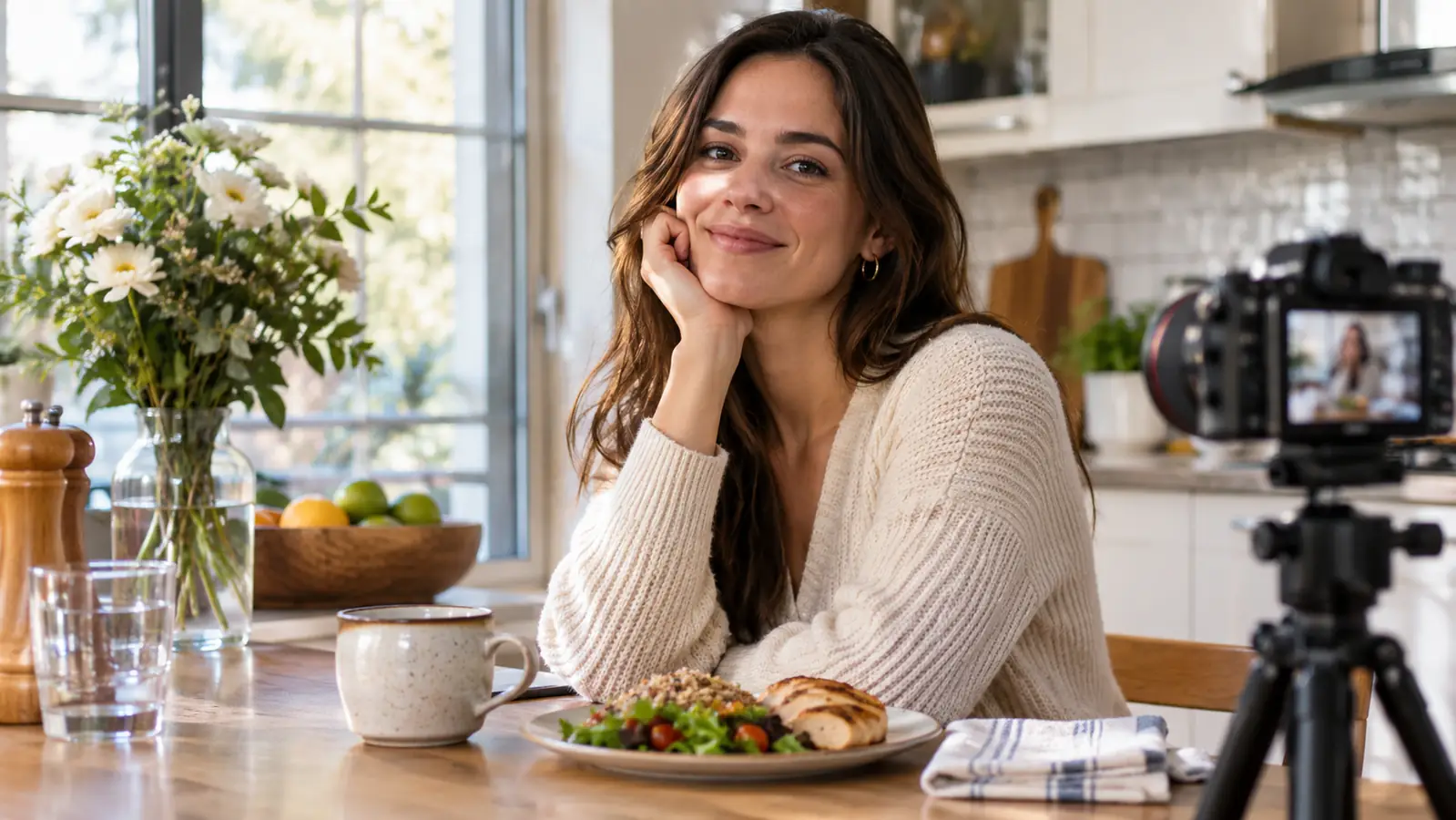
Somewhere on my laptop there is a folder with about four hundred photos of food that look like they were taken in a closet. Same kitchen. Same table. Same window. A plate of farmers market tomatoes went in looking like tomatoes and came out looking like brown paper. I blamed the lens for a while, then I blamed the sensor, and then I finally admitted that the light coming through my kitchen window was landing behind the food and nowhere else, and I had no way to move it.
My improvised answer was a sheet of white foam board from a craft store, propped against a cereal box and nudged around with a stack of cookbooks. It worked well enough that I kept it for most of a year. It also buckled at one corner, slid onto the floor twice a week, and left a seam down the middle of every bounce. In April 2025 I replaced it with the Neewer 43 inch 5 in 1 reflector, and I have used that disc most mornings since, plus a lot of Saturday afternoons on the lanai. Nineteen months later, the foam board is in the garage.
The Quick Verdict
One folding disc that fixed my kitchen food photos in an afternoon, with a stiff frame and two quirks I still mutter about nineteen months in.
Amazon Check Today's Price →Same window, same plate, two stops more light
The white side bounces soft window light onto food without a strobe or a panel. The silver side is there for gray mornings. It folds to about sixteen inches across and lives behind my pantry door.
Amazon Check Today's Price on Amazon →How I've Used It
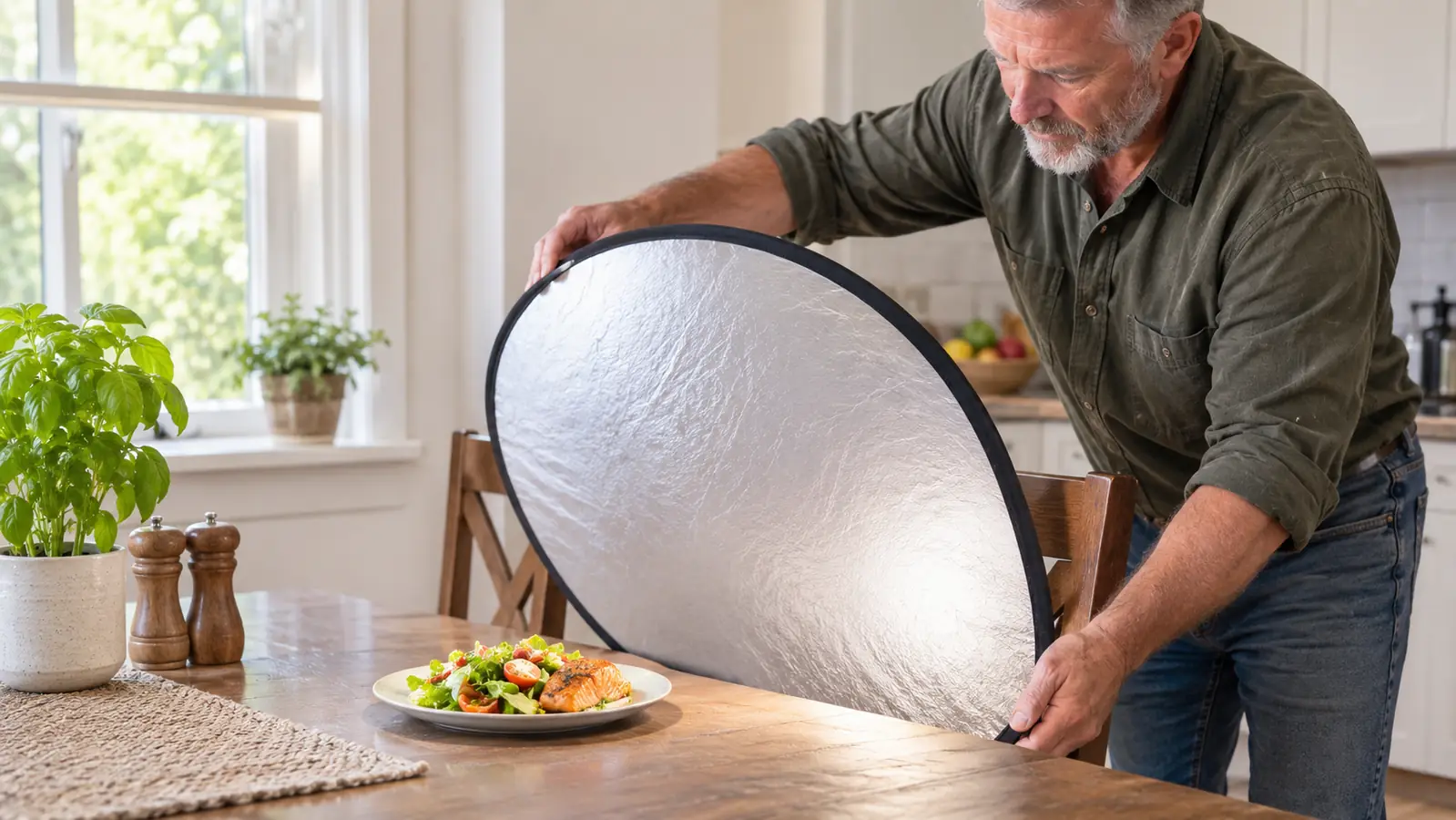
The setup is not complicated. My kitchen table sits about three feet from an east facing window, which in Hilo means soft hazy light most mornings and a hard white glare by about eleven. I put the plate where I want it, set the camera on the tripod, and lean the reflector against the back of a dining chair at roughly a 45 degree angle, a couple of feet from the food. The white side faces the plate. That is the entire rig. No stand, no arm, no clamp, just a chair I already owned.
The first week I ran a comparison out of curiosity. Same plate of lilikoi bars, same framing at 60mm on my everyday zoom, same aperture. Without the bounce I was at ISO 1600 to keep the shutter fast enough to hand hold. With the white side angled in, the same frame ran at ISO 400. The grain difference in the shadows was obvious on my laptop, and the side of the bars facing away from the window stopped vanishing into the plate. I did that test on a Tuesday morning in late April, the week after the disc arrived, and I wrote the numbers on a sticky note that is still stuck to the inside of a cabinet door. Same shutter, same aperture, one variable. That is the only clean test I have run with this thing, and it is the reason I stopped shopping for a faster lens.
Most of my use is a twenty minute loop. Saturday at the Hilo Farmers Market, home by nine, food on the table by nine thirty, shoot until the ice in the glass starts sweating. On weeknights it comes out for whatever I cooked. The disc leans on the chair, I nudge the angle an inch or two, and I am done. Nineteen months of that has not worn out a hinge, a rim, or the zip on the bag.
Angle matters more than distance, which took me a month to learn. Straight on, the bounce just adds flat light and the plate looks like it was shot with an on camera flash. At 45 degrees, high or low depending on the subject, you get a lit side and a shadow side, and the food starts to look like it has a shape. Too close and the light goes hard and directional, which is worse than no bounce at all. I keep it about two feet back now, close enough to matter and far enough to stay soft.
What the Five Surfaces Actually Do
The white side is the one I use almost every day. It throws a soft bounce that reads like more window, not like a lamp, and if you are coming from foam board it is the closest match in quality. The difference is size and durability. A 43 inch surface spreads light across a whole place setting instead of one hot spot, and it does not curve or delaminate after a humid Hilo summer the way my board did. Before the Neewer disc, my foam board measured about twenty by thirty inches and only covered the plate if I lined everything up perfectly. If the plate was wide, the far edge fell off the bounce and went dark. The 110 cm disc covers the plate, the props, and a slice of table beyond them, which means I stop repositioning between frames.
Silver is the strong one. It pushes noticeably more light and it lifts specular highlights, which is great on the crust of bread, the oil on grilled fish, the wet cut edge of citrus, and awful on a glossy plate or a glass of water, where it lands as a bright rectangle you cannot edit out. I reach for silver on gray mornings when the window is flat. White gets the call the rest of the time.
The translucent panel is a diffuser, and it earns its keep between ten and two when the sun is high and the window shadows go hard. I lean it between the window and the food and the slash of light turns into something usable. Gold warms everything, which is fine at sunset and too much for a plate of saimin, so mine mostly stays folded inward. Black is a flag. I set it on the far side of the plate to block a reflection or deepen the shadow side when a subject goes flat.
Two stops is the gap between ISO 1600 and ISO 400, and that gap is the whole reason my kitchen photos stopped looking like they were shot under a porch.
What Changed in the Photos
The shadow side is where I see it. A bowl of poke used to go dark on the right half, and no amount of editing brought the fish back without turning the rice gray. With the bounce aimed at that side, the bowl reads as a bowl. Texture shows up in things that used to look smooth: the crumb of a scone, the oil sheen on a plate of opakapaka, the sugar crust on a lilikoi bar. I keep a folder of before and after frames from the same sitting so I can be honest with myself about whether gear is doing anything. The poke shots are the clearest pair I have: same bowl, same window, twenty minutes apart, and the only difference is a white disc leaning on a chair.
The other change is technical but it matters. More light on the subject means a lower ISO or a faster shutter, and either one gives me a sharper frame at f/5.6 on a table that is not perfectly steady. I shoot at f/5.6 because that is where my zoom is at its best and where I can keep the whole plate in focus from the front edge to the back. The reflector is what makes that possible indoors without dragging out a second lamp.
The black side solved a problem I did not know I had. Shoot a glass of water or a plate with a glaze and the window shows up as a bright rectangle on the surface. A black flag on the far side of the subject kills it. I also use black to deepen one side of a bowl of soup when the whole thing is reading as an even gray disc with no depth to it.
Then there is Mochi, who is four, entirely black, and the hardest thing in my house to expose. If I expose for her face, the window behind her turns into a white sheet. The white side, angled low and to one side, lifts detail in her fur without touching the background. She will sit for about six frames before she leaves. That is still six more usable frames than I got before April 2025. The trick took a few tries. Angled too high, the bounce catches her eyes and she squints. Angled low, it fills the fur without flattening her.
Where It Gets Annoying
Folding it the first time, I was convinced I had broken it. You twist the rim and the disc collapses into thirds, and the steel hoop resists right up until it gives. Do that badly and you leave a crease in the fabric that shows in the bounce. Nineteen months in I can fold it in about four seconds. The first month, it was a two hand wrestling match every single time.
Size is the trade. Forty three inches is wonderful at the table and awkward in a kitchen with two people in it. When we have company, the Neewer disc goes back behind the pantry door because there is nowhere to lean it. It also does not stand up on its own. Mine rests on a chair back, which means the thin steel rim sits against wood, and I have a small scuff on one dining chair to show for it. I measured it once out of frustration. Forty three inches across is wider than the gap between my table and the counter. On a normal weekday that is fine. On a Sunday with Dale making pancakes on one side and me shooting on the other, it is a traffic problem, and the disc loses.
Two more honest notes. It is not water resistant, and on the windward side of this island that matters. I got caught by a passing shower on the lanai once, dried it right away, and got lucky. It also turns into a sail in any breeze, so outdoor use needs weight or a second pair of hands. The warranty is 180 days, which is not a lot of confidence from a company that builds a metal rimmed disc.
The gold side is the one I use least. It warms everything by a lot, which is nice on a sunset over Onomea Bay and wrong on a plate of food, where it turns white rice yellow and makes greens look tired. If you shoot people outdoors in late light, gold is the reason this disc exists in a five in one kit. At my kitchen table it stays folded in.
The Cats, the Lanai, and Other Jobs
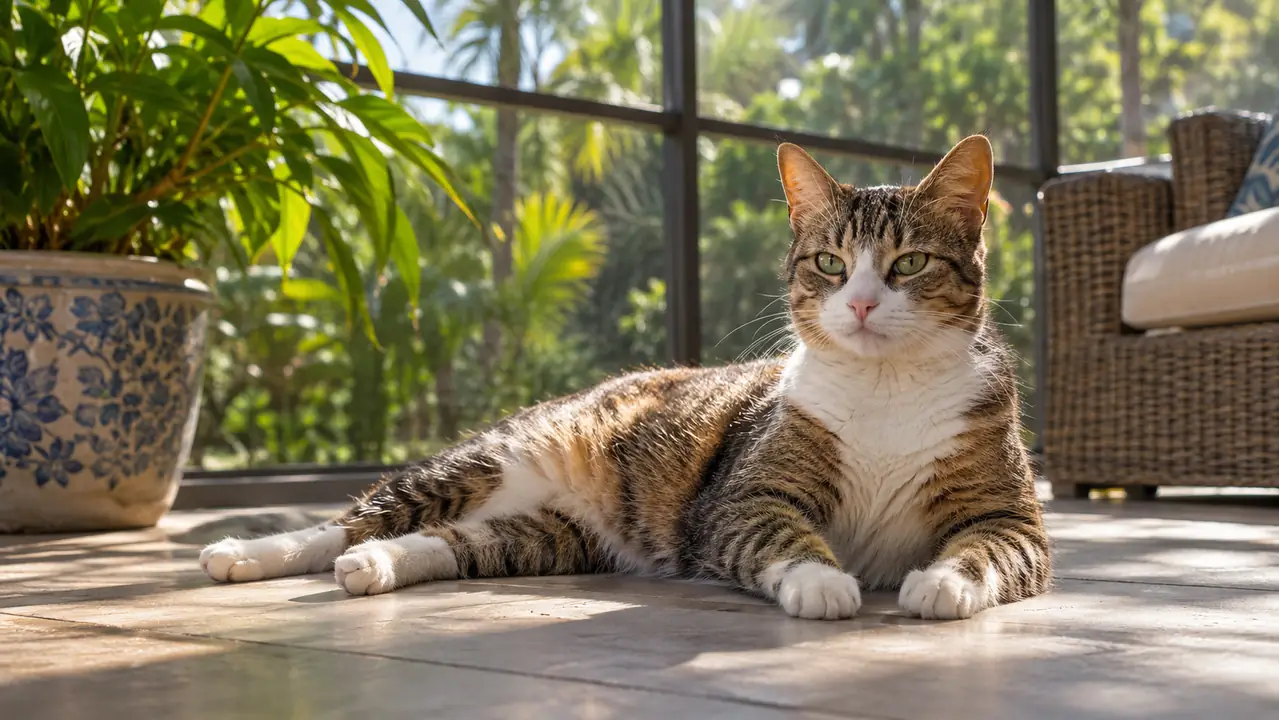
Pika is seven, gray, and pathologically interested in whatever I am doing, so she walks into most shots on purpose. The disc gives me something to do about that. With the white side low and angled, I can light her face where she sits by the screen door without moving her, and the backyard goes soft behind her instead of blowing out. Same trick as the food, just aimed at a moving subject.
I do not take it to the farmers market. It folds small enough, about sixteen inches across and an inch and a half thick, and it weighs a pound and a half, so it would fit behind the seat in the SUV. I just never have. The market is chaos and the light there is already good under the tents. Home is where I need help, so home is where the disc stays.
What I Liked
- The white side alone replaced a foam board I propped up for the better part of a year
- A 110 cm surface spreads light across a whole place setting instead of one hot spot
- Five surfaces in one folding disc, so soft bounce, hard bounce, diffusion and flagging all come in the same bag
- Folds to about sixteen inches across and weighs a pound and a half, easy to move between kitchen and lanai
- The translucent panel doubles as a diffuser when midday window light goes hard
- The included zip bag keeps it out of the way behind a door, which is where mine lives
Where It Falls Short
- Nothing holds it up on its own, so you need a chair, a clamp, or a patient helper
- 43 inches is a lot of disc for a small kitchen and it comes down when guests arrive
- The steel rim is thin and slippery against furniture and left a scuff on my dining chair
- Not water resistant, which is a real limitation on the rainy side of the island
- Any breeze turns it into a sail outdoors
- The warranty runs 180 days, and the gold side is too warm for food
Who This Is For
This is for the person who cooks, plates, and shoots at the same table every week and has run out of ways to move the light. Home bakers, people photographing their own dinners for a hobby blog, anyone shooting small still lifes near one window. It also suits you if your subjects are cats, plants, or anything else that sits still indoors in ordinary room light and you want more shape without buying a strobe.
Who Should Skip It
Skip it if your problem is darkness rather than direction. A reflector bounces what is already there and cannot invent light, so a dim apartment at seven in the evening needs an actual source. Skip it if you shoot video alone and need both hands free, since this needs a chair, a clamp, or a helper. Skip it too if you have no floor space to lean a 43 inch disc, because a smaller one will do for a single plate.
Nineteen months in, the foam board is in the garage and the Neewer disc is behind the pantry door, which is where things live when I actually use them. It is not a light. It is a way of pointing the light you already have, and it fixed the thing that was wrong with every food photo I took in my own kitchen.
If your food photos keep coming out flat, aim the window before you buy a lens
Nineteen months of near daily use, one stiff frame, and a white side that still does most of the work. If you shoot at one table with one window, this is the gear I would hand you first.
Amazon Check Today's Price on Amazon →