
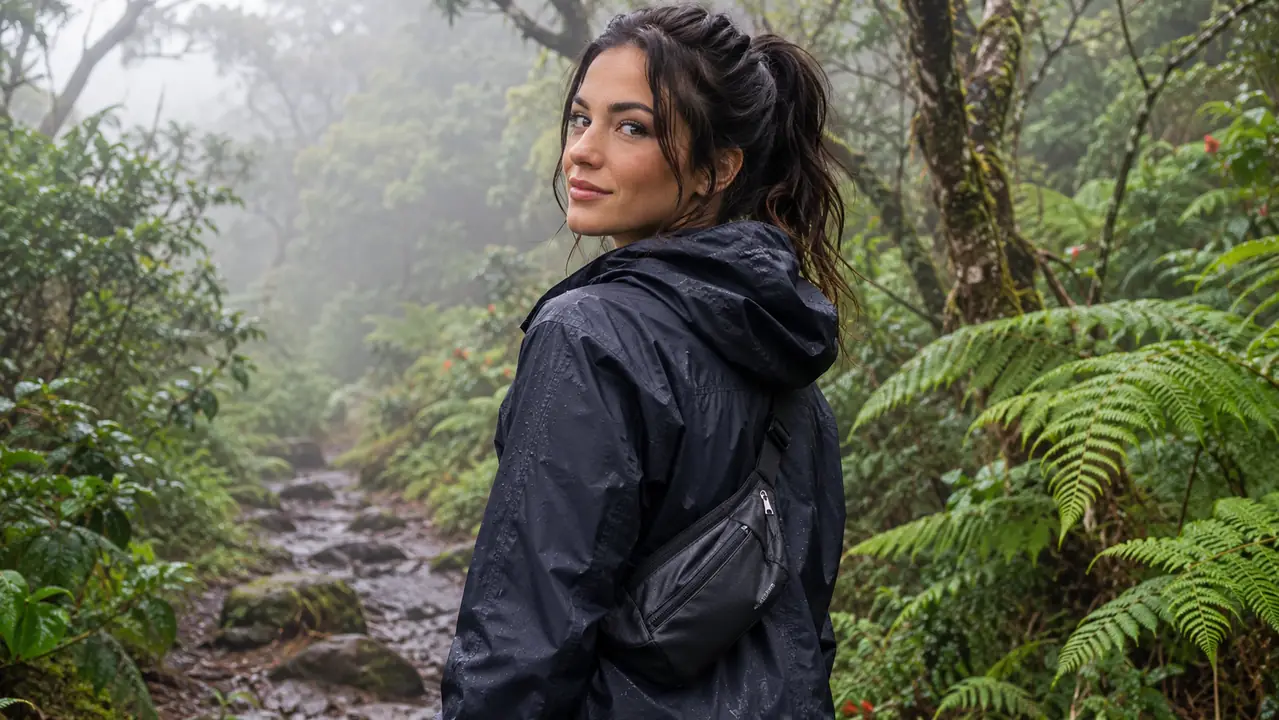
The short answer: if your whole kit is one camera and two lenses, and you shoot the way most of us actually shoot, walking a trail and stopping when something moves you, the K&F Concept sling bag is the better bag. If you carry two bodies, four lenses, filters, a laptop and a full-size tripod to a paid job, a full-size camera backpack is the better bag, and it is not close.
I bought the K&F Concept sling bag in June 2025, after years of carrying my camera in an ordinary hiking daypack with a dish towel wrapped around it. That is about seventeen months of wet Saturdays on the windward side of the Big Island, which is a hard place to be a camera bag. I have never owned a dedicated camera backpack. I judged that side of this comparison from a camera club friend's pack, from handling one in a store, and from a lot of reading.
Better, in this case, means better for how hobby photographers actually carry gear. Almost nobody hikes four hours to a waterfall and then changes lenses six times. They carry one body, one lens mounted, one spare, and a cloth. That is exactly the load this sling is built around: the listing says one camera and two lenses, one included flexfold divider, and internal dimensions of 10.6 by 6.7 by 4.1 inches. My mirrorless with the 24-105mm on it and the 70-300mm beside it fills the bag and no more. That is the honest place to start.
| K&F Concept Sling Bag | Full-Size Camera Backpack | |
|---|---|---|
| What fits | One camera plus two lenses, arranged with the included flexfold divider | Two bodies, several lenses, filters, a jacket and a laptop |
| Getting to your camera | Swing it around to the front and the zipper is already under your hand | Set it down or slide one strap off and dig in from the top |
| Weight on a long day | One adjustable strap, one shoulder, comfortable for a few hours of walking | Two straps and a waist belt move the load onto your hips |
| Narrow trails and crowds | Stays inside your silhouette, roughly the size of a small daypack | Wide and tall, so it catches branches and the people behind you |
| Rain | Water resistant polyester shell, and a folded rain sleeve fits in the front pocket | Usually ships with a rain cover built into the base that deploys in seconds |
| Tripod | Bottom carry straps hold a small tripod up to 2.99 inches in diameter | Side pockets and straps sized for a full-size tripod and a water bottle |
| Small stuff | Front pocket plus inside and back pockets for cards, batteries, a blower and keys | One main compartment and a lid pocket, so small items sink to the bottom |
| The bag's own weight | About 600 grams before you put anything in it | Noticeably heavier empty, before you add padding and a frame |
What the K&F Concept Sling Bag Actually Carries
The bag weighs about 600 grams empty, which matters when you are the one carrying it up a hill. Externally it measures 13 by 8.6 by 5.9 inches, so it reads as a small daypack on your back rather than as a camera bag. The shell is polyester with abrasion-resistant thread, the closure is a zipper, and the listing calls it water resistant. I treat water resistant as meaning exactly that. It shrugs off spray and a light shower, and I still drop a rain sleeve in the front pocket before I leave the house.
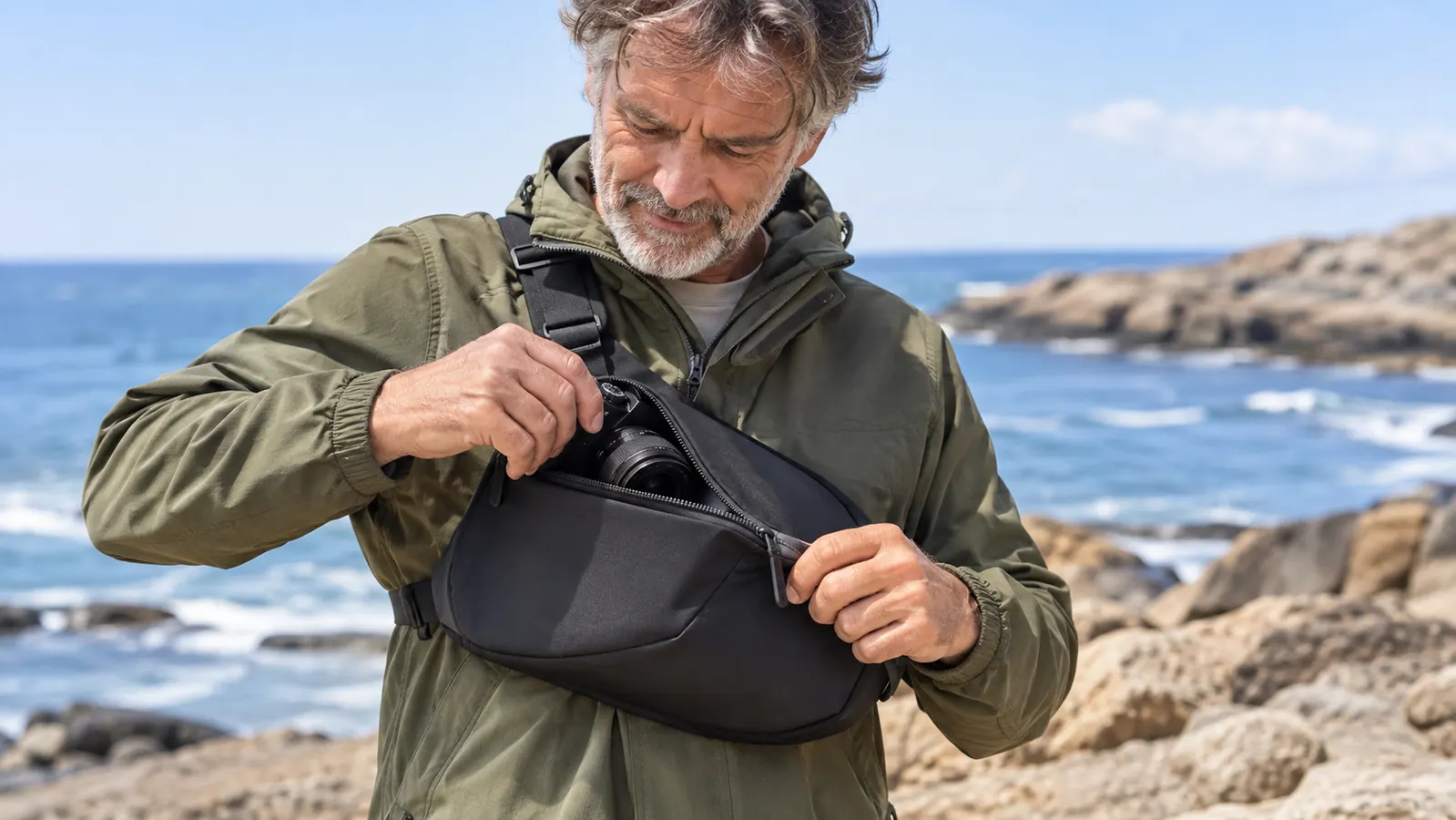
Inside, the included flexfold divider lets you shape the main compartment around what you actually own. Mine is set up so the 24-105mm sits nose down on one side and the 70-300mm lies along the other, with a microfiber cloth folded into the gap between them. The front pocket takes the rain sleeves, the blower and my keys. There is also a pocket against your back for cards and a spare battery, which is the pocket I use most, because it is the one I can reach without taking the bag off. Two bottom carry straps are sized for a small tripod with a maximum diameter of 2.99 inches. My carbon tripod is longer than that, so it rides over my shoulder on its own strap, which has never bothered me. The manufacturer warranty is six months, which is short, and I would rather tell you that than let you find out.
The packing routine has not changed in about a year, which is how I know it works. Blower and one microfiber cloth in the front pocket, two folded rain sleeves behind them, spare battery and card wallet in the pocket that sits against my back, keys in one of the inside pockets so they stop scratching the camera. The 24-105mm rides nose down with the hood reversed, the 70-300mm lies along the other side, and the flexfold divider sits between them. The one time I tried to add a small borrowed 35mm, the bag zipped but the lid pressed on the zoom ring hard enough that I could feel it through the fabric. I took the 35mm back out and have not tried since. The listing says one camera and two lenses and I now believe it. If you want to argue with that, argue with the internal measurement of 10.6 by 6.7 by 4.1 inches, because that is the number that stops you.
Where the K&F Concept Sling Bag Wins
Access is the whole argument. At Onomea Bay the waves come in sets and you get a few seconds between them. With a backpack you either shoot while the pack stands at your feet, or you unshoulder it, set it down, dig, zip, lift, and by then the light has moved. With the sling you rotate it around your ribs to the front, unzip, and your hand is already on the grip. Seventeen months in, that motion is automatic, and it has gotten me shots I would otherwise have fumbled.
The other half of it is size. The sling stays inside my silhouette. On the Akaka Falls trail, where the boardwalk is narrow and wet and people are coming the other way, a wide pack catches branches and shoulders and the person behind you. This one does not. It also never touches the ground, which sounds like a small thing until you have set a bag down in mud to change a lens and then put it back on your shoulders.
What that looks like on an ordinary weekend: a Saturday at the Hilo Farmers Market, where I want the camera out for maybe forty seconds at a time and then want both hands free for a papaya and my wallet. The sling swings forward, I shoot the stacked lilikoi and a tray of malasadas, it swings back, and I keep walking. A backpack would mean stopping dead in a crowded aisle, or shooting one-handed with a pack hanging off one shoulder and sliding toward the gutter. Then Liliuokalani Gardens afterward, the little bridges and the still water, where I am crouching and standing and crouching again. Nothing on the bag drags in the grass. That sounds trivial until you have knelt in wet grass with a pack and had to wipe the back panel before getting into the car.
A few smaller things that add up. The adjustable shoulder strap goes down to 34.25 inches and out from there, so it sits over a rain shell in January and over a t-shirt in July without becoming a different bag. There is a webbing handle on top, which I use far more than I expected when lifting it off the back seat of the SUV one-handed with a coffee in the other. And it is light. Empty, about 600 grams. Loaded with the body, the telephoto, two rain sleeves, a blower, a cloth, a snack and my keys, it is still something I forget I am wearing on the climb back up. There are enough pockets that small things have homes, which for me means I have stopped losing lens caps in the bottom of a bag.
Where the Full-Size Camera Backpack Wins
Now the other side, honestly. A full-size camera backpack carries more, and it carries it better. The one I borrowed from a camera club friend has two shoulder straps, a sternum strap and a real waist belt, and the difference on a long climb is not subtle. The weight goes onto your hips instead of one shoulder. If you are carrying two bodies, a wide lens, a telephoto, filters, a laptop and a jacket, the backpack is the only sane answer, and the sling is not in that conversation at all.
It also handles rain better in one specific way. Many full-size packs ship with a rain cover built into the base that pulls out and covers the whole bag in about five seconds. With the sling I am fussing with a separate sleeve, and if I am caught out without one, the bag gets wet. Backpacks also have proper side pockets for a full-size tripod and a water bottle, which this bag simply does not.
The last advantage is not a feature. It is that the backpack lets you bring everything, and there is a real cost to the sling's discipline. I have missed shots of the birds at my feeder because the 70-300mm stayed home and the 24-105mm was on the camera. A backpack would have let me bring both. That is the trade, and you should pick with your eyes open.
Her pack also showed me what over-packing costs. She carries two bodies because she shoots a camera club outing where changing lenses in the wind is a bad idea, and once you commit to that, everything else follows: the filters, the blower, the spare batteries, the jacket, the water bottle. The pack swallows all of it and the waist belt makes it carryable, and then you are the person at the trailhead deciding not to walk the extra half mile. I have watched that happen. The sling's limitation and the backpack's strength are the same fact, and which side of it you land on depends on whether you are out there shooting or out there hauling.
In seventeen months I have never once set the K&F Concept sling bag down in the mud to get to my camera. That is the whole argument, and it is also the whole limitation.
One body, two lenses, and your hands free on the trail
The K&F Concept sling bag is what I reach for on a Saturday morning at Rainbow Falls or the farmers market: light, water resistant, and reachable without setting it down. It is not the bag for a two-body kit, and it does not pretend to be.
Amazon Check Today's Price on Amazon →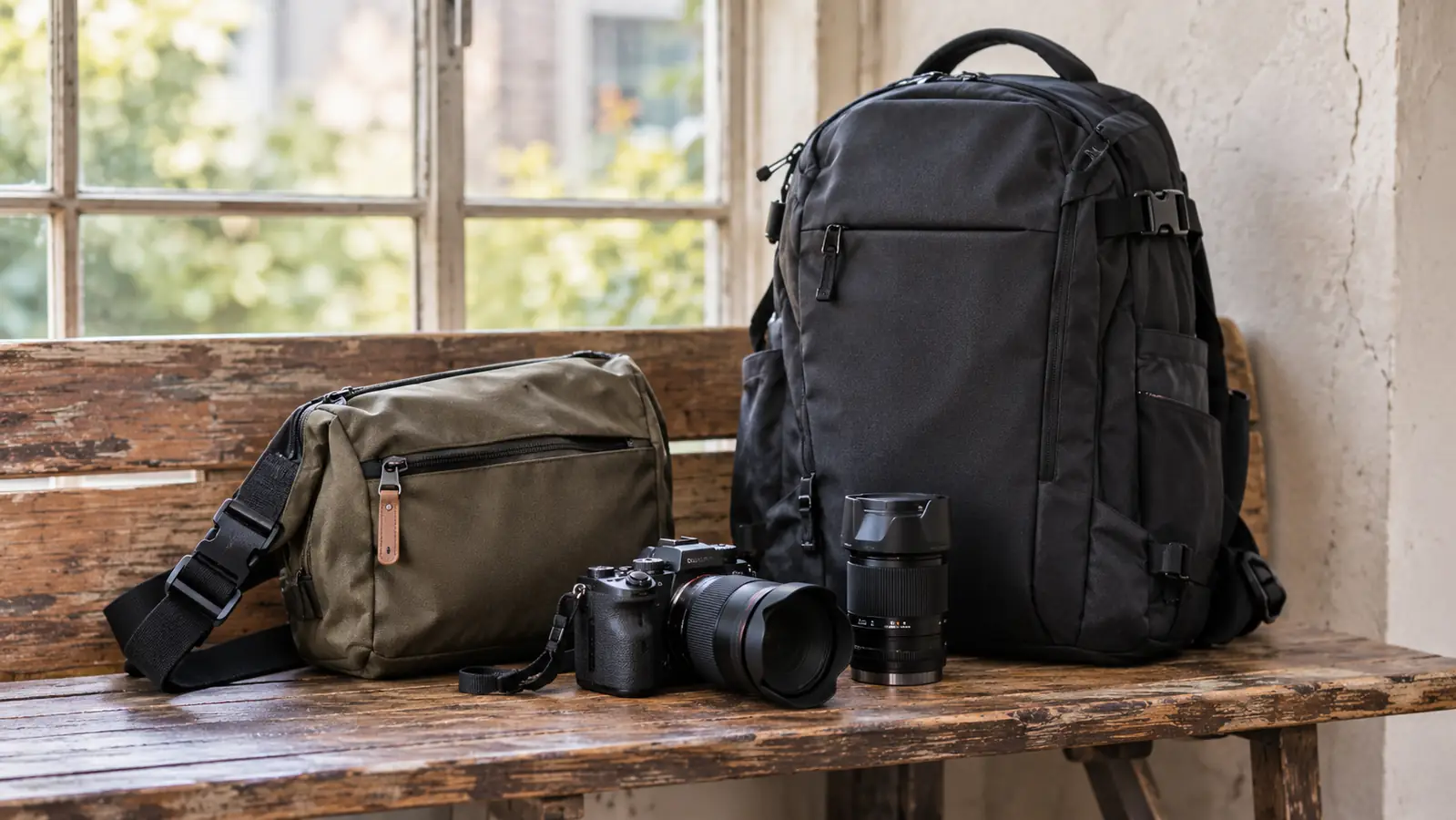
The Part Nobody Puts on the Spec Sheet
Here is the thing a spec sheet cannot tell you. The best camera bag is the one you actually put on at the trailhead. My sling lives by the door. It goes into the back seat of the SUV on Saturday morning without anyone making a decision about it. The friend with the full-size backpack loves hers and leaves it home for anything under two hours, because lifting it out of the closet already feels like a commitment.
So the question is not which bag is objectively better. It is which bag matches the shoot you actually do. Rainforest trail, tide pools, farmers market, my own kitchen with a reflector bouncing window light onto a plate of food: one body and one spare lens covers all of it. The one time a year I want three lenses is not enough to justify two straps and a waist belt every Saturday.
Worth saying plainly too: the sling will not survive being treated like a backpack. The shell is polyester with abrasion-resistant thread and the listing calls it water resistant, but there is no frame and no back panel structure, because it is not built to be set down and stacked and sat on. I hang mine on a hook. If you are the kind of person who drops a bag in the truck bed and drives to the trailhead, this is not that bag. Buy for the life you actually live, not the one in the product photos.
Who Should Buy Which
Buy the K&F Concept sling bag if you shoot with one camera and one or two lenses, you walk while you shoot, you shoot in weather, and you want the camera reachable in one motion. It suits trail photography, street and market shooting, travel where you are on your feet all day, and anyone who has been wrapping a camera in a shirt inside a regular daypack.
Buy a full-size camera backpack if you carry two bodies or three or more lenses, if you need to bring a laptop, if you hike long distances where hip carry matters more than fast access, or if you shoot events where the whole kit has to travel with you and sit in one place. Different job, different bag, and the wrong one will annoy you every single weekend.
If you shoot enough to justify both, that is the real answer for a lot of people: the backpack for the planned day, the sling for the hour before dinner. I have not bought the backpack yet. I know exactly which shoot will make me do it, and it is not the one I take on Saturday.
The bag that already has a spot by my door
Seventeen months, two lenses, one shoulder, and about 600 grams of bag. If that describes your kit, start here and skip the pack with the waist belt.
Amazon See Today's Price on Amazon →