
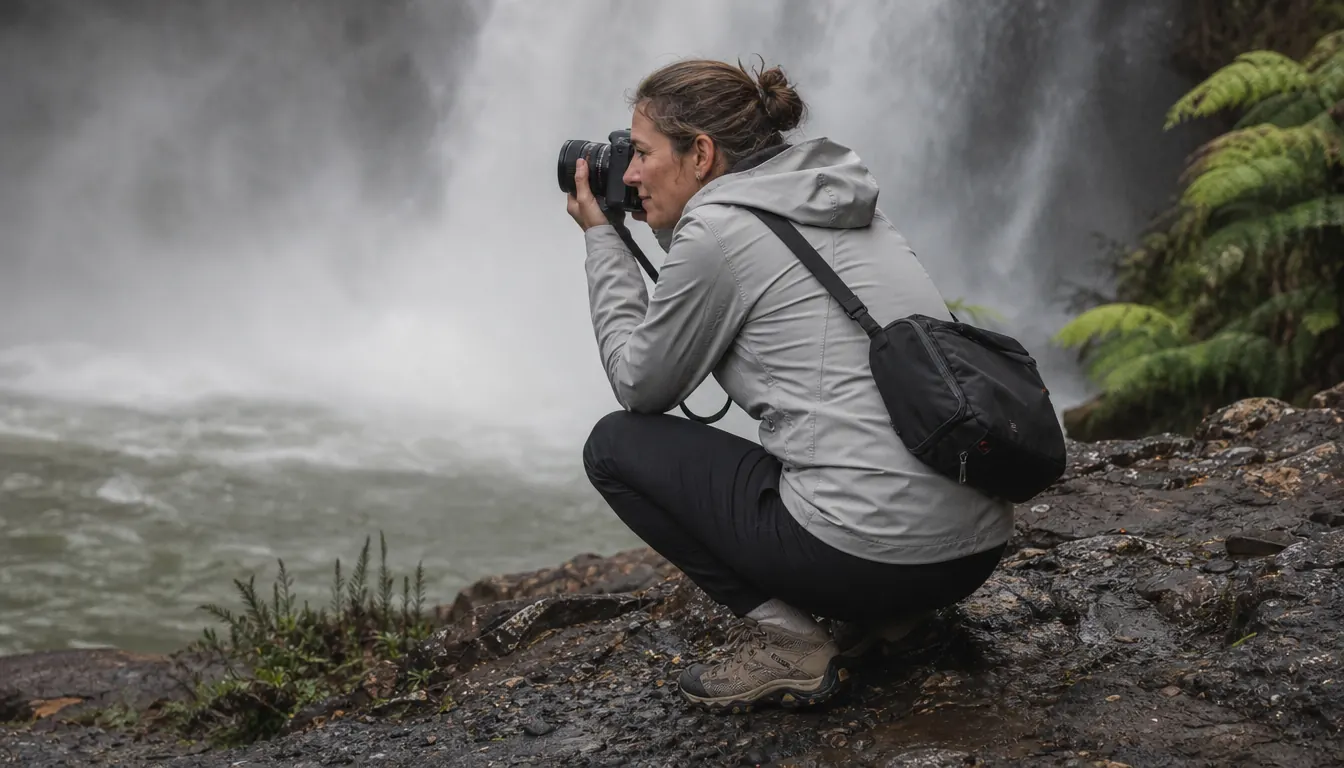
For eleven years I carried a camera in a dish towel.
That is not an exaggeration and it is not a humblebrag. I would fold the towel around my camera body, tuck the bundle into whatever hiking daypack I already owned, wedge the second lens in beside my water bottle, and zip the whole thing shut. It worked, in the sense that the camera usually came home intact. But it never worked well, and by the spring of last year it had stopped working at all.
Here is what I mean. When your camera is a towel bundle at the bottom of a daypack, you do not stop to take pictures. Getting the camera out takes both hands, a flat surface and about forty seconds. By the time I had the towel unwrapped, the light at Rainbow Falls had moved, or the bird had flown, or my knees had started complaining about the crouch. So I started leaving the camera home. Just for short walks, I told myself. Then for longer ones.
I bought the K&F Concept camera sling bag in June 2025. I have carried it on nearly every Saturday morning since, which puts me at about seventeen months with it. It is the single change that got me shooting again, and it is the least glamorous thing in my bag.
The bag I reach for every Saturday morning
Ten liters, an adjustable padded strap, and an opening that rotates to the front of your body so you never take it off to get the camera out. Check the current price and the size chart before you commit, because the listing carries both a 6L label and a 10L capacity in different fields.
Amazon Check Today's Price on Amazon →What Changed, Practically
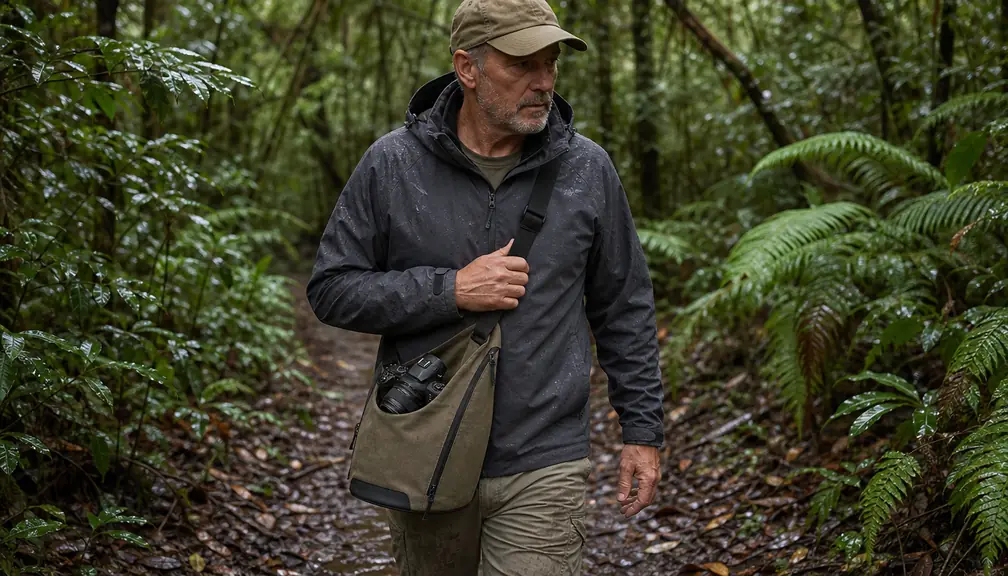
The K&F Concept bag sits low across my back when I walk and swings around to my front when I want the camera. That single movement, done with one hand, is the whole reason this thing worked for me. No setting the bag down in the mud. No clearing a flat rock. No unwrapping anything.
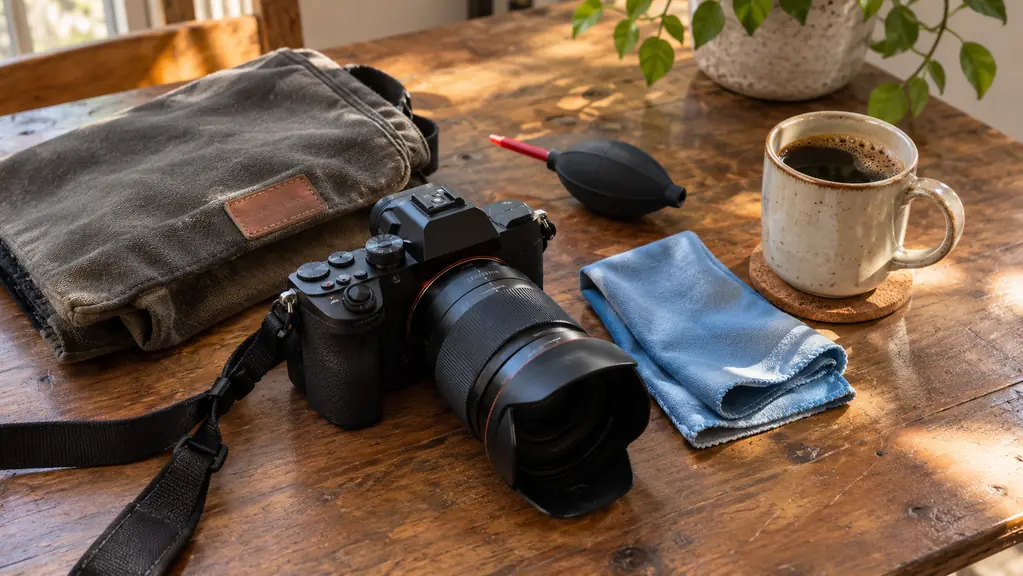
Inside, it is ten liters with one flexfold divider, which lets me split the main compartment into a spot for the body with my everyday zoom attached and a spot for the 70-300mm telephoto. The listing says it holds one camera and two lenses, and that matches my experience, though with the telephoto mounted the fit gets snug and I usually travel with it collapsed. The front pocket is where the two rain sleeves live, folded flat. The little blower and one microfiber cloth ride in one of the internal pockets, which is the only place I can reliably find them.
The shell is abrasion-resistant coated polyester, and I want to be precise about the water resistance, because that word matters on the windward side of this island. Water resistant is not waterproof. In a Hilo drizzle, walking a quarter mile back to the truck, everything inside stayed dry. In an actual downpour at Akaka Falls I put the camera in a rain sleeve anyway, and I would do that with any bag.
Getting the camera out went from forty seconds and two hands to about two seconds and one, which is the difference between shooting and not shooting.
Two things worth knowing before you buy. First, the bag is built for light rain and soft handling, not for being set down in a tide pool, and the warranty runs six months, so treat it like gear and not like armor. Second, the bottom carry straps are real but limited: they take a tripod with a max diameter of 2.99 inches, which my carbon fiber tripod is not, so the tripod still rides in the truck or over my shoulder on its own strap.
A Normal Saturday With It
Last Saturday I left the house at 6:40 with the sling already on my back. I stopped at Onomea Bay for the surf on the rocks, and I took the camera out four separate times in twenty minutes, which would have been zero times with the towel. Then the farmers market, where the bag came around to my front and I shot a tray of lilikoi butter with one hand while holding a coffee in the other. It rained on the drive home. I did not think about the camera once.
That is a small thing to be sentimental about. But the honest version of the story is that I did not need a better camera, and I did not need more skill. I had twelve years of practice and a good lens and I was barely using either. I needed the gear to stop being a small logistical problem every time I wanted to take a picture.
What I'd Tell You If We Were Sitting at My Kitchen Table
If you already own a camera bag you like, keep it. The K&F Concept sling is a good bag and it is not a personality change. It will not make your pictures better, and I would not want you to hand over money thinking it will. What it does is remove friction, and friction is the thing that quietly kills a hobby.
If you are carrying your camera in a towel, in a tote, or loose in a daypack, and you have noticed that you shoot less than you used to, then yes, get something like this. Look at the dimensions carefully before you order, because ten liters is enough for one body and two lenses and not much more. If you shoot with three lenses, this is the wrong bag. Also budget for the fact that a sling loads on one shoulder, so if your back is already unhappy on long hikes, a two-shoulder pack is the smarter call and I would tell you that to your face.
One more thing. The listing shows a 6L size label alongside the 10L capacity, and shoppers have flagged the confusion. Measure your largest lens and compare it to the internal dimensions before you click. That is the kind of thing I check now, after eleven years of dish towels.
My husband Dale does not shoot and does not care about any of this. But he noticed that I started leaving on Saturday mornings again, and he said so, and he was right.
Stop leaving the camera at home
The bag that turned a forty-second unwrap into a two-second reach. Ten liters, one flexfold divider, coated polyester rated water resistant. Worth it if you carry one body and two lenses. Not worth it if you carry three.
Amazon See the K&F Concept Sling Bag on Amazon →