
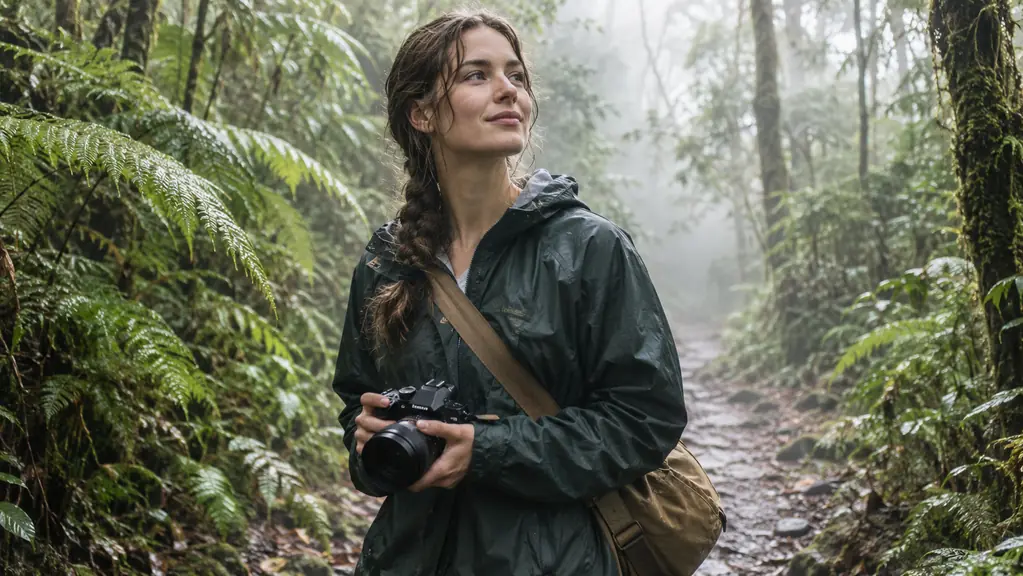
The bag I carried before this one was a hiking daypack with a dish towel folded in the bottom. My camera rode in that pack like a carton of eggs, and every time I set it down on wet lava rock I held my breath. I bought the K&F Concept Camera Sling Bag in June 2025, and I have carried it for about 17 months now, through rain at Rainbow Falls, salt spray at Onomea Bay, and a lot of slow mornings on my own lanai. This is the honest version of that experience, including the parts that are not flattering.
I am 44, I work in a dental office, and photography is what I do with my Saturdays. My camera is a weather-resistant mirrorless body, and I carry two lenses: a 24-105mm zoom that stays on the camera most days, and a 70-300mm telephoto for birds. Before the K&F Concept bag, I had no system. I had a daypack, a dish towel, and a habit of guessing where my spare battery had gone. The sling bag gave me a place for the camera, the long lens, the rain sleeves, the blower, a cloth, my keys and a snack. That sounds small. On a trail in Hilo, it is not small.
The Quick Verdict
A light 10 liter sling that carries one camera and two lenses well. It sheds rain, not a downpour, and it puts the weight on one shoulder.
Amazon Check Today's Price →See the pocket layout and current price on Amazon →
The 10 liter sling is the bag I reach for on wet trails and at the farmers market. Check the divider layout, the strap range and the bottom tripod straps on the listing.
Amazon Check Today's Price on Amazon →How I've Used It
I shoot close to home. Rainbow Falls, Akaka Falls, Onomea Bay, Liliuokalani Gardens, the Hilo Farmers Market, my lanai, my kitchen. The bag has been to all of them. On a Saturday I put it on crossbody, drive to the trailhead, and wear it with the bag rotated to my front when I am working a scene. The camera comes out, the long lens goes in, and I do not have to take the bag off and set it in the mud. That one habit changed how often I stop to shoot.
The first month I treated it like a camera case. I packed it carefully, and I checked the dividers every time. Now I pack it the way I actually shoot. Camera with the 24-105mm attached in the main compartment, 70-300mm beside it behind the flexfold divider, rain sleeves and blower in the front pocket, a cloth in the inside pocket, keys in the back pocket. That is my load. It has not changed much in 17 months, which is a good sign. A bag that makes you repack every trip is a bag you stop using.
I am not gentle with gear, but I am careful with it. I set the bag down on dry rock, not in a puddle. I wipe it with a damp cloth when it comes home. The outside is polyester with abrasion-resistant thread, and after 17 months of lava rock, boardwalks and market tables, it still looks like a bag I bought last year. The zippers still run. The strap still adjusts. Nothing has ripped. That is not exciting. It is exactly what I want from a bag I use every week.
What Fits, and What Does Not
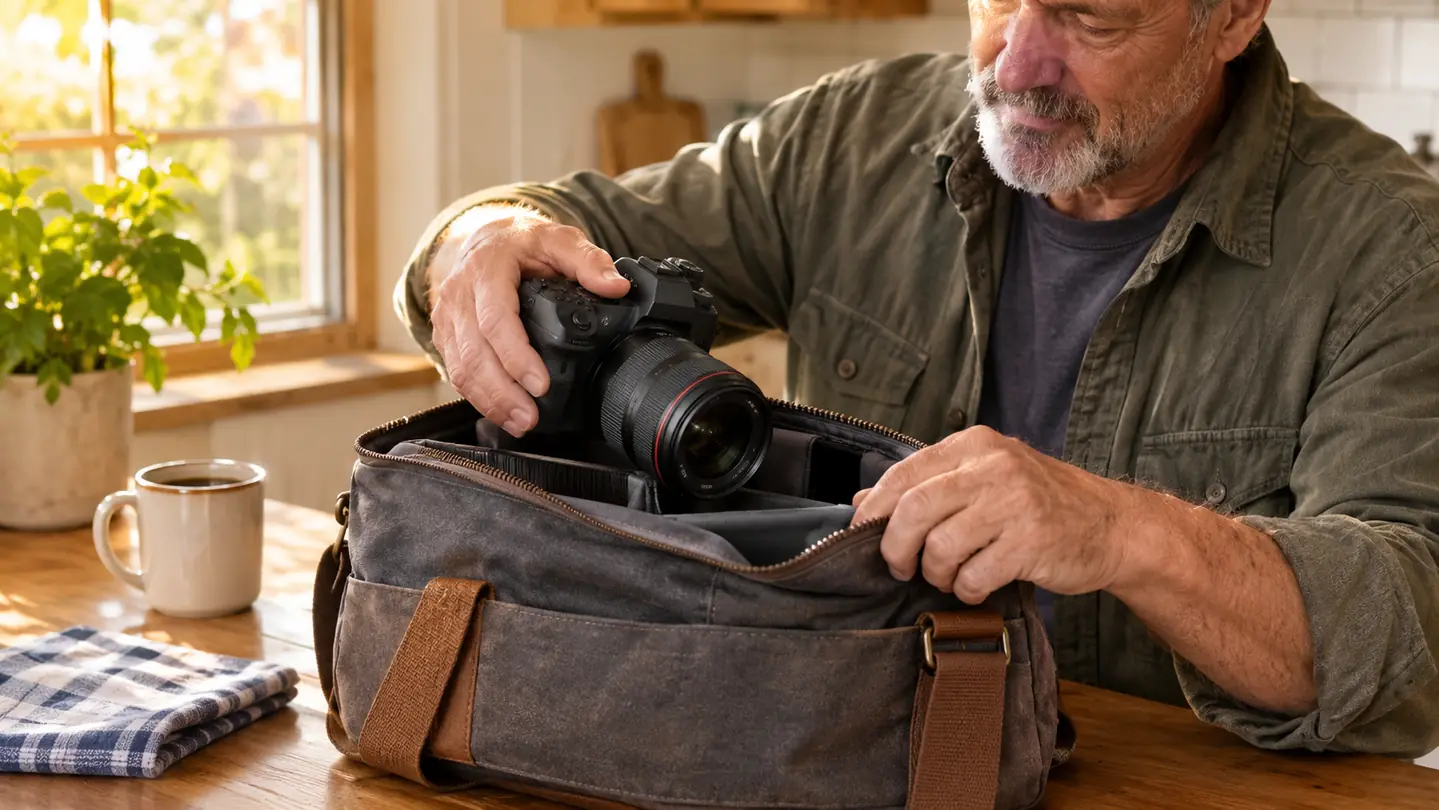
The listing says 10 liters, and the size field also says 6L, which is the kind of contradiction that makes you close the tab. I went by the external and internal dimensions: 13 by 8.6 by 5.9 inches outside, 10.6 by 6.7 by 4.1 inches inside. That is enough for one camera and two lenses, which is exactly what the listing says it will hold. My body with the 24-105mm attached fits in the main space. The 70-300mm fits beside it with the divider between them. I would not try to add a third lens, and I would not try to make this a video bag.
The flexfold divider is the part that makes it work. It is one divider that you can fold and reposition, so the main compartment can be one big space or two smaller ones. I use it as a wall between the camera and the long lens. When I want to carry only the camera and a snack, I pull the divider out and the bag becomes a soft shoulder bag. That flexibility is the reason I still use it after 17 months. If the divider were fixed, I would have outgrown the bag by now.
Here is what does not fit. A full size water bottle does not fit inside in any way that leaves the camera room. A rain jacket does not fit. A laptop does not fit, and I would not treat this as a laptop bag. The bag weighs 600 grams empty, so it is light, but it is not a pack you fill with everything. It is a camera bag with room for the small things that keep a shoot moving.
One feature I use more than I expected is the bottom external carry straps. They let you attach a small tripod, with a maximum diameter of 2.99 inches, under the bag. My tripod is a carbon fiber Neewer N55C, and it does not ride in the bag. I carry it by hand or over my shoulder on its strap. If you have a small travel tripod, the bottom straps are a real option. If you have a full size tripod, plan to carry it. The straps are there, but they are not a magic shelf.
Weather: Water Resistant Is the Right Word
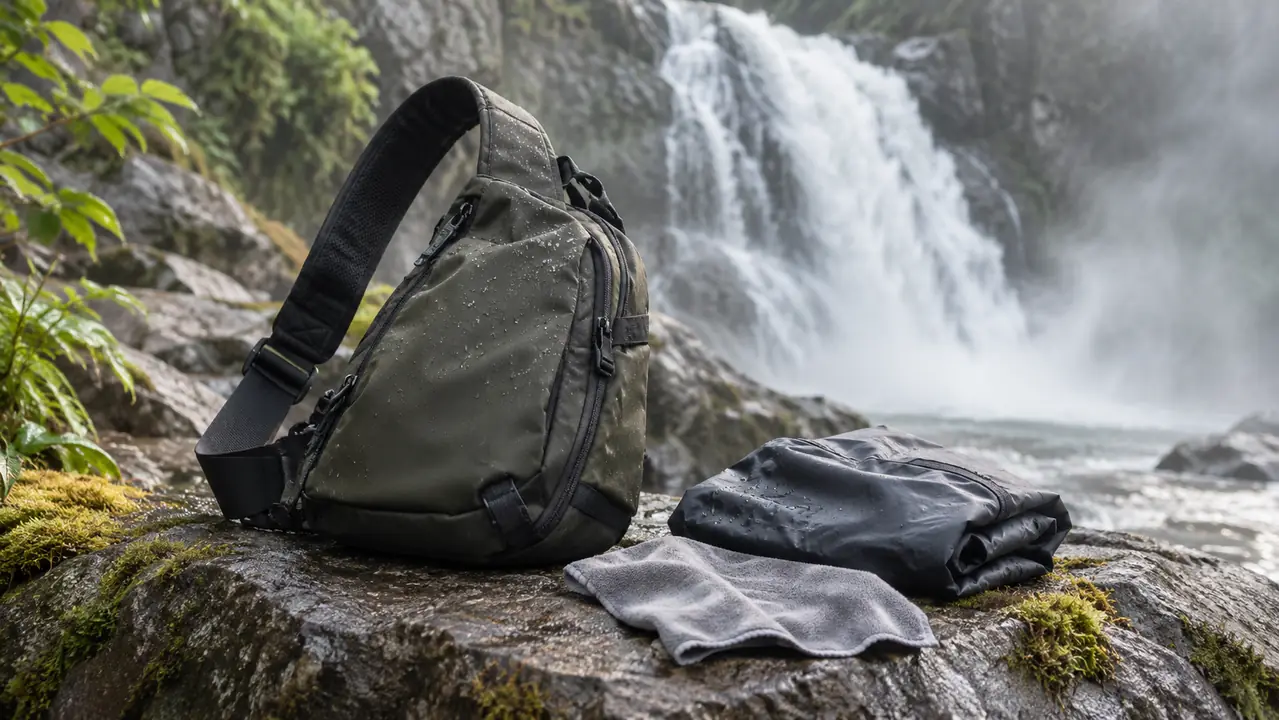
The listing calls the bag weatherproof and the water resistance level is water resistant. I am going to be precise, because this is the part where gear reviews get people into trouble. The bag is made of polyester, and it sheds drizzle. It keeps out rain in the time it takes you to get from the trailhead to the car. It is not waterproof. Water will find the zipper and the seams if you leave it in a downpour, and no soft bag at this size is a dry box. If you need a dry box, buy a dry box.
My first real rain test came in January 2025, before I bought this bag, when I used a plastic grocery bag and a rubber band at Rainbow Falls. That is how I used to handle rain. Now the OP/TECH Rainsleeve lives folded in the front pocket of the K&F Concept bag, and the bag itself handles the first ten minutes of a shower while I get the sleeve on the camera. The two sleeves and a blower are the reason the front pocket is not empty. In Hilo, rain is not an emergency. It is the forecast.
After a wet morning I empty the bag, wipe the inside with a dry cloth, and leave it open on the lanai to air out. The humidity here is the bigger issue. A bag that stays closed with damp gear inside will grow a smell you cannot get rid of. The sling bag is easy to open and easy to wipe, and that matters more to me than a waterproof rating. I have not had mildew, and I have had damp hikes. The difference is the drying routine, not the fabric.
Comfort on a Long Walk
Comfort is where a sling bag lives or dies, and this one is good for a few hours, not all day. The strap is adjustable, and the bag sits across my body with the weight on one shoulder. I can get the bag to sit at my hip or rotate it to my front without taking it off. The strap range starts at 34.25 inches, and I have plenty of adjustment left. If you are a large framed person, check the listing for the maximum, because one shoulder bags are less forgiving than backpacks.
On a two hour walk, it is fine. On a four hour walk, I notice it. The bag carries 600 grams empty, plus camera, lens, rain sleeves and water, and that is all on one shoulder. I switch sides at the turnaround. I also rotate the bag to my front when I am stepping over roots, because a bag that swings behind you on a wet trail is a nuisance. The sling stays close to the body when I tighten the strap, and that is the setting I use on narrow sections.
The bag does not turn a heavy kit into a light kit. It just moves the weight to a place where you can reach the camera. If I am climbing to Akaka Falls and back, I take the camera out, carry it on the strap, and let the bag ride light. That is not a flaw in the bag. It is the nature of a one shoulder design. If you want to carry weight all day, a backpack is the right tool. This is the bag for the walk where you want the camera out often and the load small.
The Small Annoyances and the Wear Report
Two things took me longer to like. The first is access. A sling bag is not a camera backpack with a full clamshell. You unzip the main compartment and work from the top. In the first weeks I missed the easy flat open of a backpack. Now I rotate the bag to my front and unzip it while it is still on my body, which is faster than taking a backpack off, setting it down, and opening it. The access is different, not worse.
The second is the front pocket. It is one front storage pocket, plus the inside multi-functional pockets and the back pocket. That is enough for sleeves, blower, cloth, keys and a snack, but it is not an organizer for every small thing. I use a small zip pouch for spare batteries and cards, because otherwise they end up in the bottom of the main compartment. The bag did not come with that pouch. That is my addition, and it cost me nothing because I already had one.
The warranty is six months. I have not needed it. After 17 months the bag is fine, but I would rather tell you the number than let you find it on the listing and wonder why I skipped it. A six month warranty is not generous. It is also not unusual for a soft bag at this level. If a warranty is the thing that makes you feel safe, buy from a seller with a longer return window and test the bag hard in the first month.
After 17 months, the honest wear report is boring, which is what I want. The outside has no tears. The zipper pulls still work. The strap has not frayed. The flexfold divider has a crease where I fold it, but it still does its job. The inside lining wipes clean. The only wear I can point to is on the bottom, where the bag meets the ground. It has a little scuffing from lava rock and concrete. That is normal. The bottom carry straps are still attached and still secure.
What I Liked
- Carries one camera and two lenses in a 10 liter bag
- Weighs 600 grams empty
- Flexfold divider repositions for a one lens day
- Water resistant polyester handles drizzle and light rain
- Front, inside and back pockets keep small gear separate
- Bottom straps fit a small tripod up to 2.99 inches in diameter
- Adjustable strap starts at 34.25 inches
Where It Falls Short
- Not waterproof, so a downpour needs a rain sleeve
- One shoulder carry gets old after a few hours
- No room for a full size water bottle or rain jacket
- Six month warranty is short
- Size field says 6L while the listing says 10 liters, which is confusing
- Main access is a top zip, not a flat clamshell
Ten liters carries one camera and two lenses. It does not carry a rain jacket, a water bottle and your lunch. That is not a flaw. It is the deal you make for a bag that stays out of the way.
Who This Is For
If you shoot with one body and one or two lenses, if you walk trails where rain is normal, and if you want the camera on your body instead of in a pack you have to take off, this bag makes sense. It is a good fit for hobby photographers who shoot close to home, for farmers market mornings, for garden and food photos, and for anyone stepping up from a phone camera who wants a small kit that does not feel like luggage. It is also a good fit if you are willing to switch shoulders and keep the load light.
Who Should Skip It
Skip it if you need to carry a laptop, a water bottle, a rain jacket and a tripod all at once. Skip it if you have a large camera body with a battery grip, or if you carry three or more lenses. Skip it if you have shoulder or neck problems that make one shoulder carry painful. Skip it if you shoot in sustained heavy rain and need a dry bag, because water resistant is not waterproof. And skip it if you want a bag that opens flat like a suitcase, because this one is a top zip sling.
If your camera still rides in a daypack with a dish towel, start here
The K&F Concept sling bag is not a backpack and it is not a dry bag. It is a light 10 liter carry for one camera and two lenses, with a front pocket for rain sleeves and a strap you can rotate to your front. Check the current price and the divider layout on Amazon.
Amazon Check Today's Price on Amazon →