
I bought the Altura Photo lens cleaning kit in August 2024, about a week after I ruined a shot of Onomea Bay with the hem of my t-shirt. The sun came out from behind a cloud, I lifted the camera, and every highlight had a soft grey smear across it. The shirt had not cleaned the lens. It had just moved the oil around. I ordered this kit that night. Two years later it still lives either in my sling bag or in the desk drawer at home, and I have a much clearer idea of which parts of it matter. This is the honest version: what is actually in the box, which pieces I still reach for, and the ones I quietly stopped using by the third month.
I shoot rainforest trails, waterfalls, tide pools, birds at the feeder, farmers market food, and whatever I happen to be cooking on a Sunday. Almost all of it happens on the windward side of the Big Island, where it rains most weeks and the humidity never really leaves. Salt air is in the mix too, because I am never far from the coast. Glass down here picks up a film of moisture and fine grit faster than anywhere I have shot. A cleaning kit is not an accessory for me. It is maintenance, the same way oil changes are maintenance.
The Quick Verdict
The spray and the cloths earn their place in my bag. The rest of the box is starter filler, and the case is not water resistant, which matters if you live somewhere wet.
Amazon Check Today's Price →The bottle of spray is the reason this kit stays in my bag
Alcohol free, ammonia free, odor free, and 56.7 ml of it. That is the piece I would replace first if I lost the whole thing.
Amazon Check Today's Price on Amazon →How I've Used It for Two Years
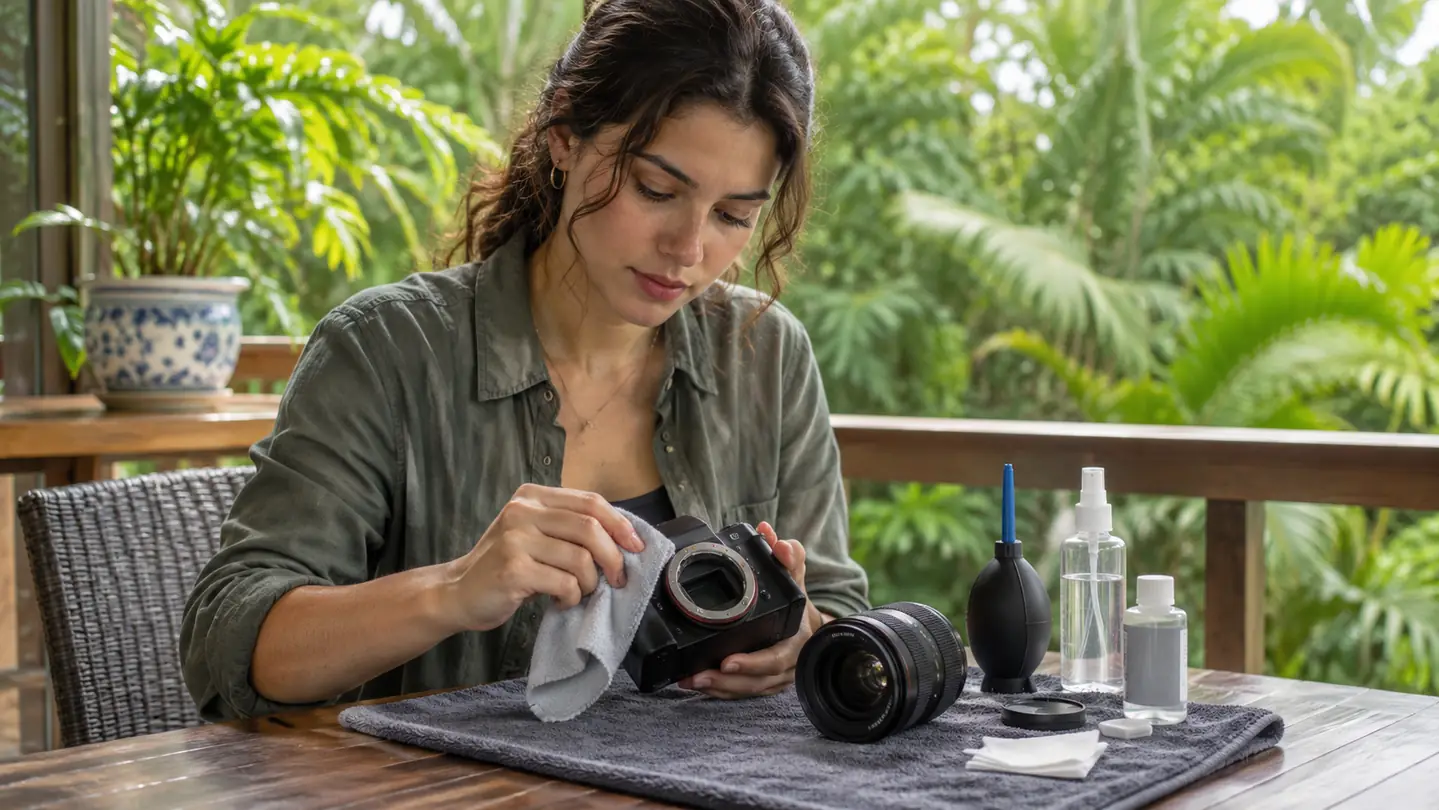
My routine is boring, which is the point. After a Saturday morning at Rainbow Falls, I set the camera on the kitchen table, take the lens off the body if I have been somewhere damp, and blow the loose grit away first. Then a pass with the brush. Then two pumps of spray onto a cloth, never onto the glass, and a slow circular wipe from the middle out. Then I let it sit for a minute before the cap goes back on. Four minutes, start to finish. I do it twice a week in the wet months and once a week the rest of the year.
Two years of that is somewhere around two hundred cleanings, and the bottle is still going. 56.7 ml sounds like a sample size until you notice that you are using two pumps at a time and not eight.
Let me be honest about the first month, because it was not clean. I sprayed the glass directly the first time. Bad idea. The liquid beaded and ran toward the edge of the element, and I spent ten minutes chasing a streak with a dry corner of a cloth, making it worse before I made it better. What works is two pumps onto the cloth, folded once, wiped from the middle out, then a fresh dry section of cloth to finish. I also learned to take the lens off the body when I clean at the table, because a lens attached to a body and held at an angle is a lens you are about to drop.
I shoot birds at the feeder from the lanai with the 70-300mm, and that lens takes more abuse than anything I own, because it sits pointed out into the air for long stretches while I stand there like a statue. Pollen lands on it. Fine dust lands on it. The front element gets a pass with the blower and the cloth most weekends. I have needed fewer wet cleans on it than I expected, which says something about how much of this job is really just moving air.
The day that sold me on the blower was a misty morning at Akaka Falls. Spray from the falls was drifting across the viewing area and my front element was spotting up every few frames. I was not about to pull out a cloth and grind that moisture and grit around in circles. I blew it off, checked the frame, and kept shooting. That is a small thing. It is also the difference between coming home with twelve usable frames and coming home with three.
The blower and one cloth live in my sling bag. Everything else stays in the desk drawer at home, which is fine, because the real cleaning happens at the table anyway. On a trail I am only ever blowing grit off or wiping the front element. If I need more than that in the field, something has already gone wrong and I should stop and deal with it instead of making it worse.
What Is Actually in the Box
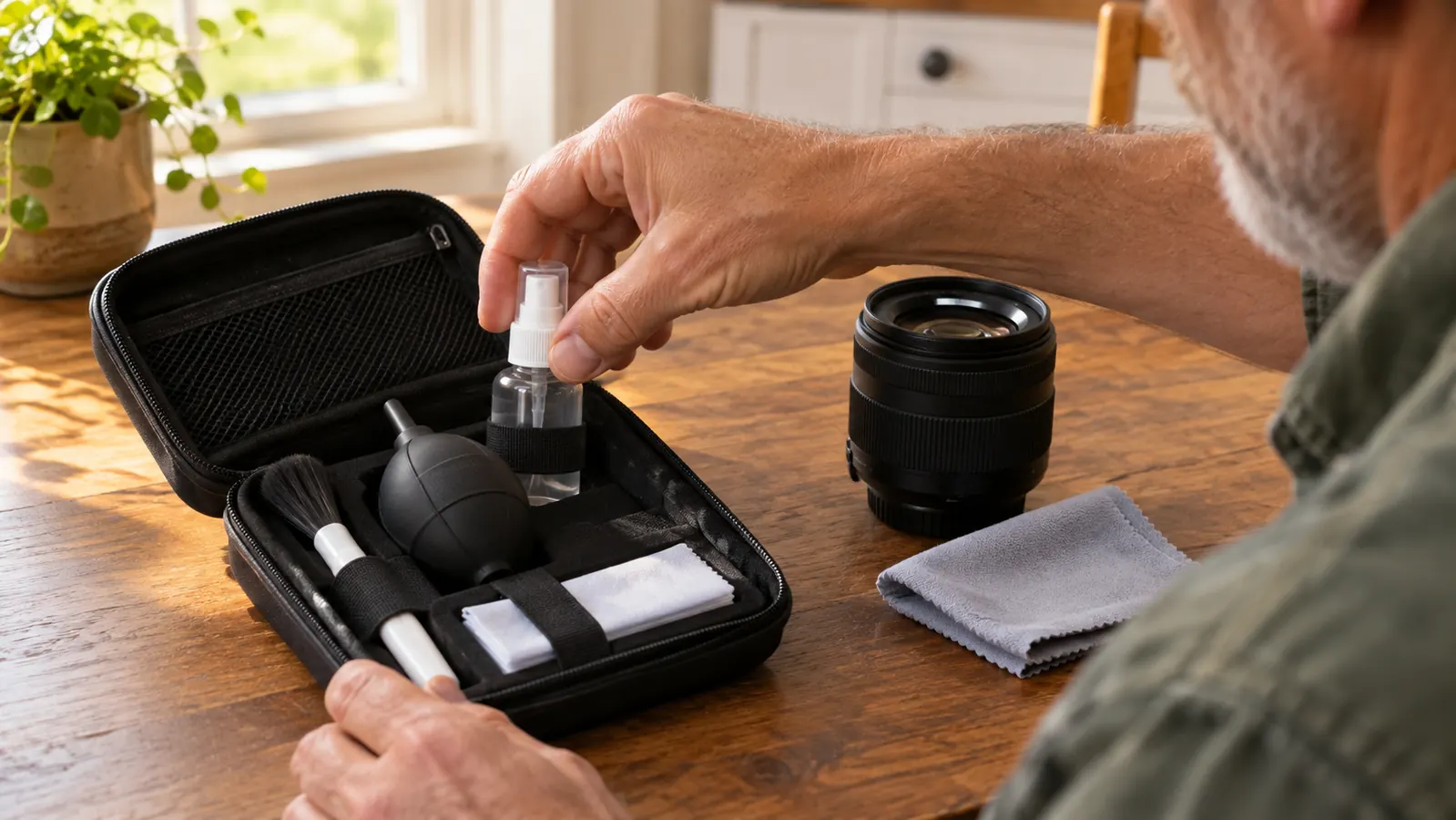
Here is the plain inventory, based on what arrived and what the Altura Photo listing says. A 56.7 ml spray bottle of lens cleaner that is alcohol free, ammonia free, and odor free. A retractable cleaning brush. An air blower. A lens pen. Microfiber cloths, more than one, which matters more than it sounds. The listing calls it a camera cleaning kit compatible with all camera brands and models, and that matches my experience, since I have used it on my everyday zoom and on the telephoto without thinking about it twice.
The spray is the heart of it. Alcohol free matters to me because I am wiping coated front elements, and I would rather use something mild and repeat the job than use something hot and hope. Odor free sounds like a line from a spec sheet until you have cleaned a lens at the kitchen table with your lunch sitting right next to it.
Two things surprised me when the box landed. The first is how small the spray bottle is in the hand. 56.7 ml reads like nothing on a listing, and it looks like nothing when you pull it out. The second is how much of a clean is air. I assumed I would be using liquid most of the time, and after two years I would guess that at least half my cleanings never touch the spray at all. Loose grit, pollen, a cat hair that drifted onto the front element while the lens sat on the table, all of it comes off with the blower and a cloth. The spray comes out for fingerprints, and for the film that builds up after a wet morning.
The blower is the second most useful thing in the box. Loose grit is the enemy. If you wipe grit across glass, you are sanding. I blow first every time, even when I am in a hurry, and especially when I am in a hurry.
The brush is fine. It is a brush. Mine has stayed reasonably clean because it lives in the drawer instead of loose in a bag, where it would pick up lint and then hand that lint straight to the glass.
Do not sleep on the cloths. A dirty cloth is worse than no cloth at all, and having several means you can throw one in the wash and still have a clean one for the next session. Wash them on their own, skip the fabric softener, and let them air dry. That one habit has done more for my images than any single piece of gear I have bought in the last two years.
If you wipe grit across glass before you blow it off, you are sanding.
The Parts I Stopped Using
I never bought a separate lens pen, and the one that comes in this kit has spent most of two years in the drawer. That is not really a knock on the pen. It is a tool for one specific problem, which is a fingerprint on the front element when you are away from your bag. I mostly solve that problem at home, with the spray and a cloth, so the pen sits.
The case is the other thing. It is paper and plastic, and the Altura Photo listing is plain that the kit is not water resistant. In Hilo, that is a detail worth knowing before you tuck it into a hiking pack. I do not carry the case. I carry two pieces and leave the rest at home, so mine has never been tested by weather. If you plan to keep the whole kit in your bag in a wet climate, plan on putting it inside a zip bag first.
What Nobody Tells You
Nobody tells you that most lens problems are not lens problems. The smudge on the frame usually got there because I took the cap off, put it in my pocket, and put it back on a lens that had been out in the air. A kit does not fix habits. It just makes the correction faster and far less painful than a repair ticket.
Nobody tells you that this is not a sensor cleaning kit. I have never touched the sensor in my camera and I would not use anything in this box to try. That is a different job, with different tools and a real chance of making things worse. The kit cleans the outside of the glass. That is the whole job, and it does it well.
Nobody tells you the order matters more than the parts. Blow, brush, then wet clean. Skip the first two steps and you turn a dust speck into a scratch. The box will not teach you that, and no product can. It is just something you learn, usually the hard way, ideally not on a lens you love.
Nobody tells you the pieces get used at wildly different rates either. My blower and cloths will outlive the spray by years. When the bottle runs dry I will be buying another bottle, not another kit, which is worth knowing before you decide how much kit you actually need.
Nobody tells you how much of this is weather. In Hilo the air is wet enough that a lens carried from a cool house out to the lanai will fog on the outside for a minute or two. Wiping fog is pointless. You wait. The kit sits on the table, I stand there, and eventually the glass clears on its own. What I do use during that minute is the blower, gently, to move air across the front element without touching it. It shortens the wait a little and it keeps my hands off the glass, which is the real win.
One more thing about the spray. It is for glass, and it is for coatings, and that is where I stop. I have used it on filters, on front elements, and once, carefully, on a rear element. I have not used it inside the camera and I would not. Reading the label is the entire instruction, and it takes about twenty seconds.
What I Liked
- The alcohol free, ammonia free spray clears a fingerprint in one pass without a second round
- A 56.7 ml bottle went about two years at roughly twice weekly use
- The blower and the cloths are the two pieces I actually carry, and both have held up
- Works the same on my everyday zoom and my telephoto with no thought required
- Several cloths means you can rotate one out for washing instead of reusing a dirty one
Where It Falls Short
- The case is paper and plastic, and the kit is listed as not water resistant
- The lens pen sat untouched in my drawer for two years
- Nothing in the box is for sensor cleaning, which beginners often assume
- The parts do not teach technique, and the order you use them in matters more than the parts
Where It Falls Short
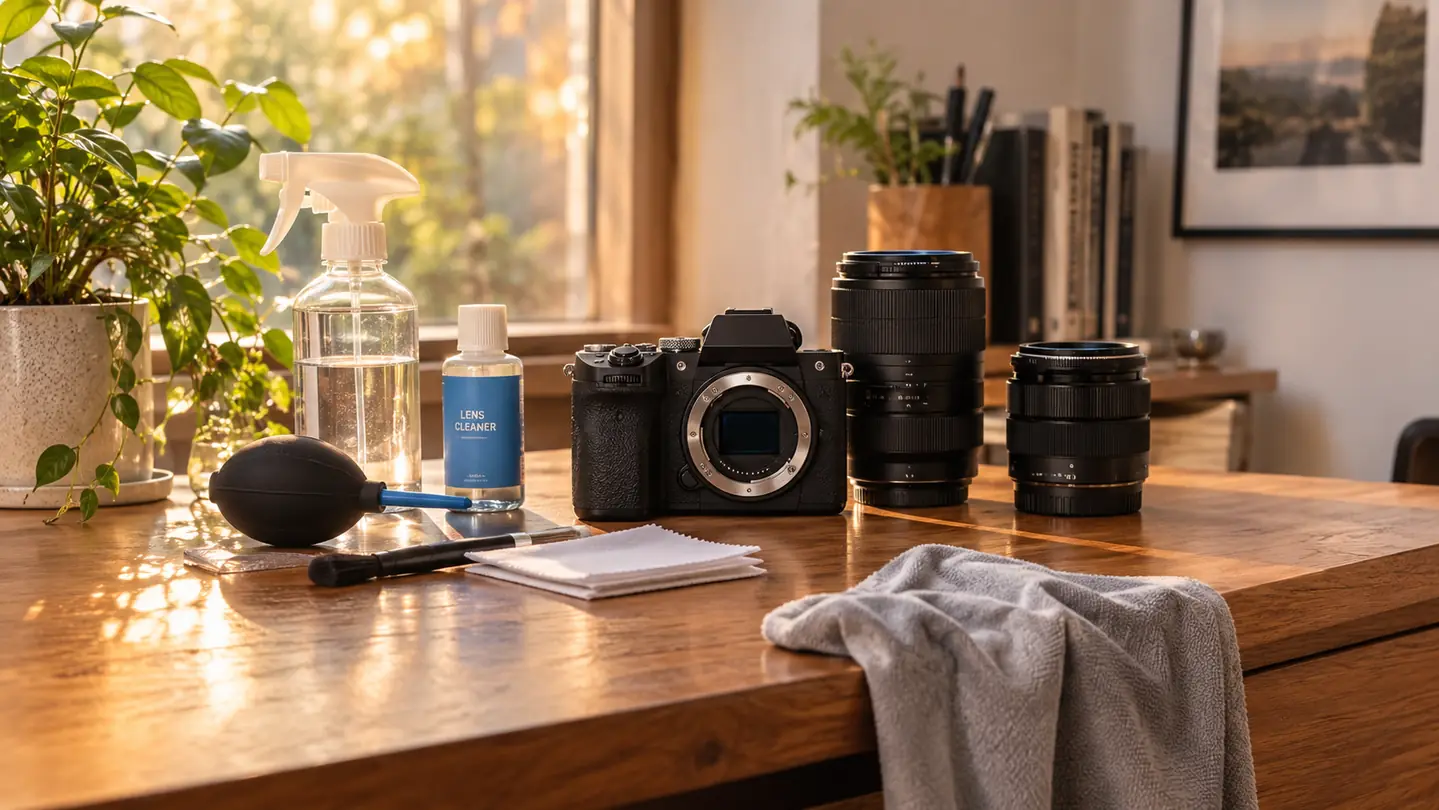
The honest limitation is that this is a surface cleaning kit for someone who cleans at home. It is not a field kit for a working photographer and it is not a full maintenance system. If you shoot in the rain, the thing you need is a rain cover. If you are chasing dust spots that show up when you stop the lens down, you need a sensor service. Neither of those problems is solved by more cloths.
A friend at the camera club carries a single lens pen and nothing else, and for her that is the right answer, because she shoots in town and cleans about once a month. A kit is a different answer to a different question. If your gear only ever sees dry air and a clean bag, one small tool is enough and you do not need a box of them. I am not that person. My gear sees rain, salt, and pollen every week, and I want the whole sequence available at the kitchen table.
The box also oversells itself by volume. More pieces sounds like more value. In practice three of them do almost all the work, and the rest are there so the box feels complete. I would rather have seen a smaller kit done properly, but the Altura Photo kit is what I own, and the parts that matter are genuinely good.
The other thing I would tell a beginner is to budget for cloths before you budget for another gadget. A clean cloth and the blower solve more problems than any single tool I have bought. I keep two clean ones in a zip bag in the sling bag, swap them out every couple of weeks, wash them on their own with no fabric softener, and dry them on the lanai railing. In this humidity nothing dries indoors overnight, so the railing does it in about an hour of morning sun.
My other complaint is the case again. Everything about the kit says desk or shelf, and nothing about it says backpack in a rainforest. That is not a reason to skip it. It is a reason to move the pieces into something that closes.
Who This Is For
This is for the person who just stepped up from a phone and has already noticed a smudge they cannot get rid of. It is for the hiker who comes home with sea spray on the front element and does not want to be the person wiping it with a shirt hem. It is for anyone who would rather spend four minutes at the kitchen table than send a lens away and wait. If that is you, the spray and the cloths alone are worth having, and the rest of the box is a bonus you will either use or not.
Who Should Skip It
Skip it if you already have a cleaning routine you trust, because this will not add much to it. Skip it if what you actually need is sensor cleaning, since this will not help and might tempt you into trying. And skip it if you want a kit that lives permanently in a bag in a wet climate, because the case is not built for that and you will end up repacking it anyway. Buy it for the spray, the blower, and the cloths. Expect the rest to sit in a drawer, exactly like mine did.
Two years, roughly two hundred cleanings, one bottle of spray still going
If your front element is already smudged, the fix is already in the box. Start with the piece that does the work and let the rest be a bonus.
Amazon Check Today's Price on Amazon →