
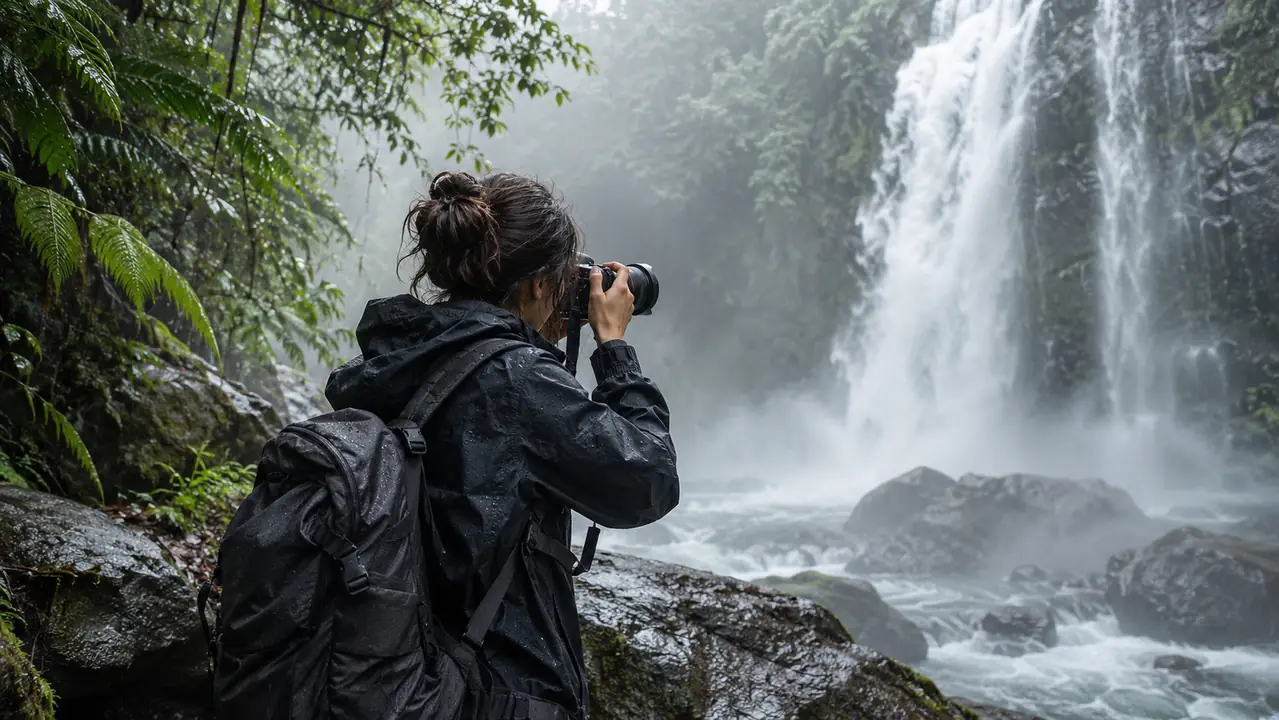
The windward side of the Big Island does not do dry air. Step out of the truck at Akaka Falls and the front of your lens fogs before you have the strap off your shoulder. I shoot rainforest trails, tide pools at Onomea Bay, the Saturday market in Hilo, and roughly nine hundred frames a year of my two cats, and for a long time my whole cleaning routine was this: breathe on the glass, wipe it on my shirt hem, squint at the smear, wipe again. It never got the glass clean. It just moved the smear around and added lint.
In August 2024 I bought the Altura Photo Camera Lens Cleaning Kit after a soggy Saturday at Rainbow Falls where I spent more time fighting smudges than framing shots. Two years later it is still the first thing I reach for, though my opinion of which pieces inside it matter has changed a lot. The blower and the spray do the real work. The pen and the case I could live without. Here is what daily use in wet air actually looks like, including the parts I would not buy again on their own.
The Quick Verdict
The blower and the alcohol-free spray do the real work, the cloths survive repeated washing, and the case is the weak link. For a hobby shooter in a wet climate, it earns its place in the bag.
Amazon Check Today's Price →The kit I grab after every wet trail
Two years in, the blower and the spray are still my first step before any shot. Current price and stock are on the listing.
Amazon Check Today's Price on Amazon →How I've Used It
My Altura Photo kit lives in two places, which tells you something about which pieces I actually use. The air blower and one microfiber cloth ride in the front pocket of my sling bag, next to the folded rain sleeves and a spare battery. Everything else, meaning the spray bottle, the brush, the lens pen and the rest of the cloths, sits in the top drawer of my desk at home. That split happened on its own over about three months. The bag holds what I reach for in the field, and the drawer holds what I use at the kitchen table with the camera in front of me and enough time to be careful.
My shooting is ordinary. Most weekends, usually Saturday morning, I drive the small SUV to a trailhead and walk with the camera over my shoulder. Onomea Bay when the surf is up, Liliuokalani Gardens when the light is soft, the farmers market when I want food photos for no better reason than that the produce looks good. During the week I photograph my two cats on the lanai, which is harder than it sounds, because Mochi is black and shy and I am forever exposing for shadow and noticing every smudge on the glass when I get the files home.
Humidity is the whole reason I care about any of this. On the windward side we get rain most weeks, and salt in the air leaves a film you do not notice until you point the camera at a bright sky and see haze across the whole frame. Before the kit, I would go a month without cleaning properly and then wonder why my waterfall shots looked flat and grey. Now I check the front element before every weekend shoot. It takes about ninety seconds, and it has done more for my photos than most of the gear I have bought since.
What's in the Kit, and Which Pieces Earn Their Place
The Altura Photo kit is a small set: a 56.7 ml bottle of lens cleaner spray, an air blower, a cleaning brush, a lens pen and microfiber cloths, all packed in a little case. The spray is alcohol-free, ammonia-free and odor-free, which matters more than it sounds. Alcohol and ammonia are fine on plain glass and hard on some lens coatings over years of use, and I would rather not find out the hard way on a lens I plan to keep. There is no smell at all, which I took as a good sign the first week and still do.
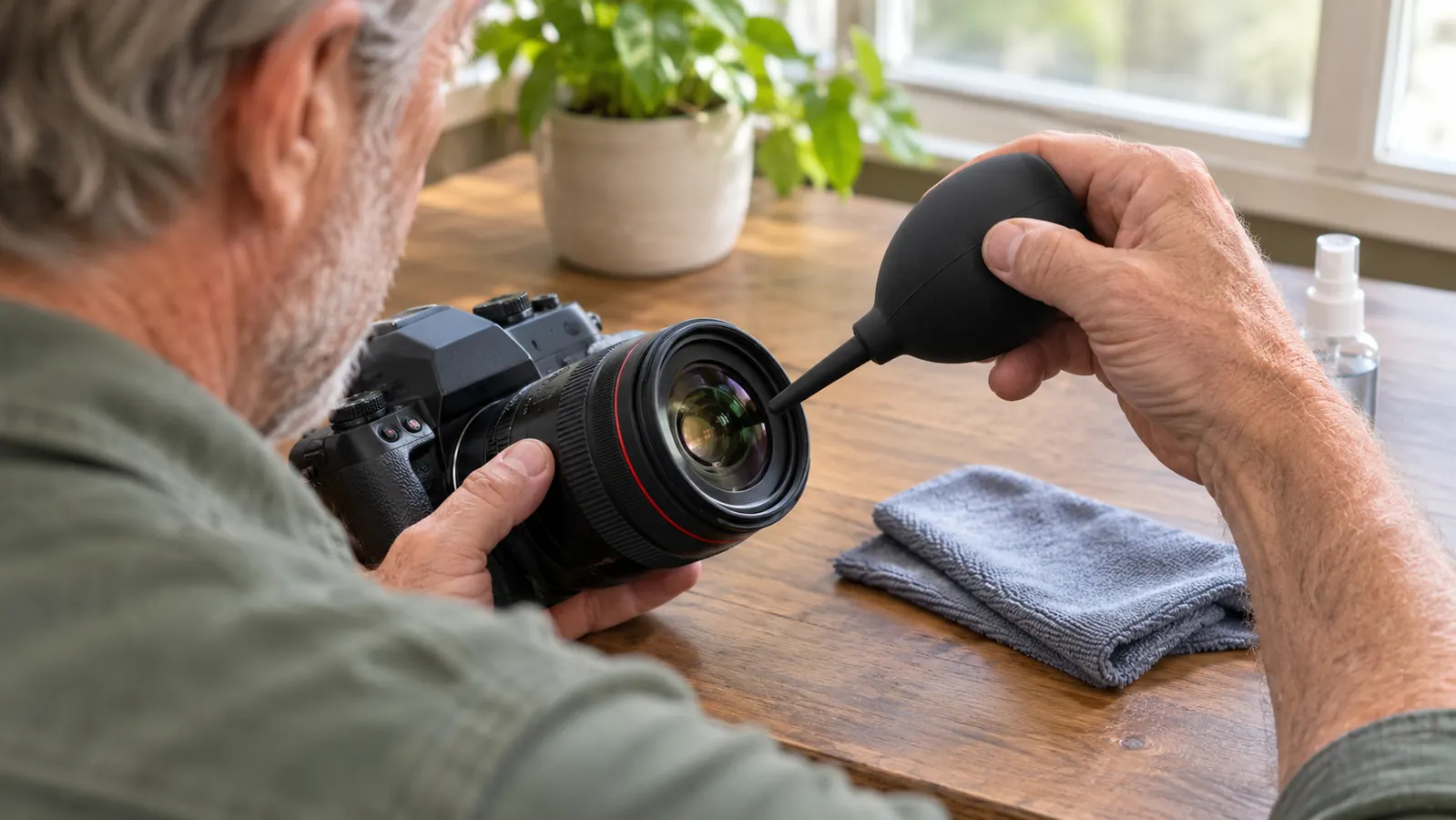
The blower is the piece I would replace first if it ever died, because it is the piece I use most. It moves a real puff of air, enough to lift dust and fine sand off a front element without anything touching the glass. The brush is a soft, wide thing that knocks loose grit off the barrel and around the mount. The cloths are the usual microfiber, roughly the size of a coaster, and they are the part of the kit I have lost the most of, usually to a jacket pocket.
The lens pen is the piece I have the least feel for. It has a brush at one end and a small round cleaning pad at the other, and mine stays in the drawer because my careful cleaning happens at home. If you shoot events or travel and need to clean a lens without a bottle of spray, a pen makes sense. If your problem is salt film and condensation, the way mine is, the spray and a cloth do more of the work. The listing shows 4.7 stars across more than six thousand reviews, and the pattern in them is the same one I landed on: the plain pieces are the ones people keep using.
Two years, cleanings twice a week, and the original 56.7 ml bottle of spray is still going. The least interesting piece in the kit is the one I have gotten the most out of.
Two Years of Rain, Salt Air and Cat Fur: What Held Up
The spray bottle has not leaked once, which I did not expect from something that lives loose in a bag. It has been dropped on a kitchen floor, rattled around in the sling bag and gone through a couple of hundred uses, and the pump still mists evenly instead of spitting a stream. A 56.7 ml bottle is a lot of cleaning for one person. I am still on the original bottle at two years, and I clean glass at least twice a week. That works out to something close to two hundred cleanings from one small bottle, which is the single most surprising number I can give you about this kit.
The blower has held up better than anything else in the Altura Photo set. No cracks, no split seam, and it still moves enough air to clear a lens in two squeezes. The cloths have been through the wash dozens of times without fraying or going stiff. I keep two in rotation, wash them with regular laundry and no fabric softener, and let them air dry on the lanai. That routine has kept them working, and it is the only maintenance the kit needs.
The case is where the kit shows its age and its price point. The material is listed as not water resistant, and that matches what I have seen. I got caught in a shower at Liliuokalani Gardens and the outside of the case went soft and damp. Nothing inside was ruined, and I dried it on the dashboard on the drive home, but I would not count on it in a real downpour. Mine stays in the drawer now, and the pieces travel loose in the bag where I can reach them.
The Order I Clean In, and Why It Matters
Sequence is the part nobody explains to beginners, and it is the difference between cleaning a lens and grinding grit into it. I start with the blower every single time, even when the glass looks clean. Loose dust and sand are what scratch coatings. You cannot wipe them off safely. You have to lift them off first, and air is the only thing in the kit that does that.
Then the brush, working from the center outward, letting the bristles do the work instead of pressing down. Then the spray, and here is the one rule I would tattoo on my own forearm: spray the cloth, never the glass. Spraying the element directly can leave liquid to seep at the edge of the glass, and in humid air it takes forever to dry. Two light pumps on a folded cloth, then a slow spiral from the center out, then flip to a dry section and buff once.
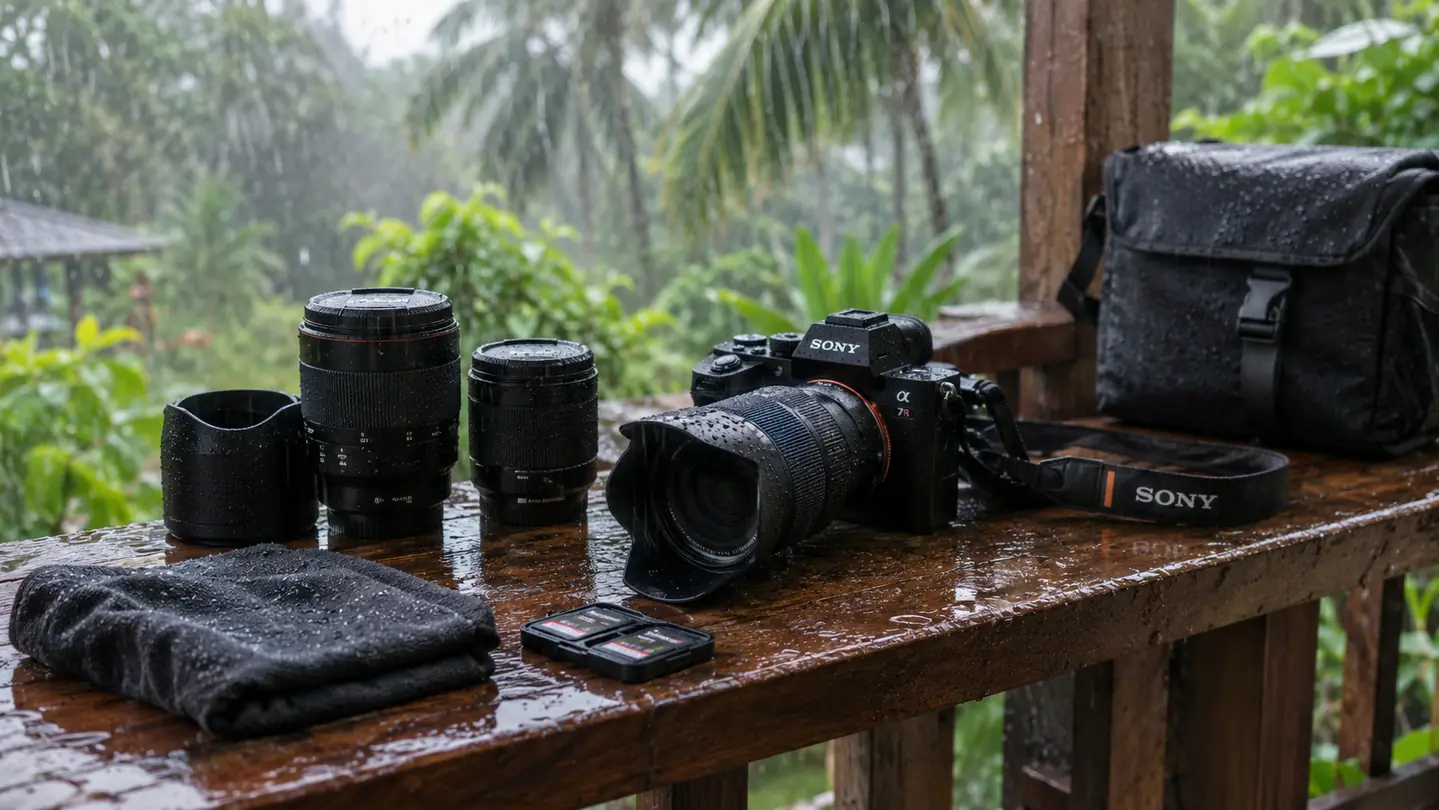
The last step is the one that saved me the most frustration, and it does not even involve the kit. After a wet hike, let the camera sit in the open bag for twenty minutes before you clean anything. Cold glass in warm humid air fogs immediately, and wiping fog just moves what is already there around. I learned that at Akaka Falls, where I cleaned a fogged lens three times in a row and made it worse with each pass.
How It Compares to What I Used Before
Before this, my gear cleaning was a shirt hem and a pack of tissues, and both left more behind than they took off. Tissues shed fibers. Cotton shirts carry oil. On a coated element in humid air, that combination produces the exact haze you were trying to remove, and you only see how bad it was when you open the files on a big screen. The difference a microfiber cloth and an alcohol-free spray makes is not subtle.
I have also borrowed a friend's lens pen at camera club, and it is a good tool for what it is. It is smaller than the kit, it lives in a pocket, and it handles a fingerprint in seconds. What it does not do is lift sand before you wipe, or hand you a second clean cloth when the first one is loaded with salt. I carry the blower and one cloth daily and leave the pen at home, and that has been the right trade for how I shoot.
Where the Kit Falls Short
The cloths are small. A coaster-sized cloth is fine for a front element and mildly annoying for a camera body or a laptop screen. I ended up buying a couple of larger cloths separately and keep one of those folded in the bag as well, which is a small extra cost the kit does not cover.
The brush is the weakest tool in the set. It handles dust on a barrel fine and does very little for grit that has dried onto the rim of the element. I use the corner of a cloth for that, damp first, and I go slowly. A denser brush would earn more of its space in my bag.
The kit also has nothing built for heavy salt spray, which is a real problem two miles from the ocean. When I come back from Onomea Bay with a haze of salt on the front element, the blower does nothing and a dry cloth drags. That is a two-cloth job: one damp with spray to lift the salt, one dry to finish. The Altura Photo kit gives me what I need to do that, but without much margin, so I add a cloth and call it fine.
What I Liked
- The alcohol-free, ammonia-free spray cleans coated glass with no smell and no residue
- The blower moves enough air to clear dust without anything touching the element
- The 56.7 ml bottle lasted two years of twice-weekly cleanings
- Cloths survive repeated washing without fraying or going stiff
- The blower and one cloth disappear into a sling bag pocket and cover the small daily problems
Where It Falls Short
- The case is not water resistant and goes soft in rain
- Cloths are small for anything larger than a lens
- The brush is the least useful piece in the set
- Nothing in the kit is built for heavy salt spray; you need an extra cloth
- The lens pen did not earn a place in my bag
Who This Is For
This is for someone who shoots for the pleasure of it and wants one small set that covers the basics without a shelf of bottles. If you have a mirrorless camera or a DSLR, one everyday zoom, and a habit of wiping the glass on your shirt, the Altura Photo kit replaces that habit with something that works. The listing says it is compatible with all camera brands and models, and I have no reason to doubt it, since nothing in the kit touches the camera itself.
It is also a reasonable thing to keep in a bag in a wet climate. The blower and one cloth weigh almost nothing and handle the small problems, the dust and fingerprints and light condensation, that make up most of what goes wrong with a lens in a normal week. If you shoot anywhere with salt air and rain, you will reach for it more often than you expect. I keep a spare cloth in the truck for exactly that reason.
Who Should Skip It
If you already own a blower and a spray bottle you like, the only thing you gain here is a second set of small cloths and a case you probably will not carry. Buy the cloths and skip the rest.
Skip it too if you need a cleaning kit that lives at the bottom of a wet backpack. The case is not water resistant, and the pieces are small enough to lose. A zip pouch of your own would serve you better. And if what you actually want is one tool for cleaning a lens on the move, a lens pen is smaller and solves a narrower problem well. Neither is wrong. They just do different jobs, and it helps to know which one you need before you spend anything.
Two years in, this is still the kit in my bag
The blower, the spray and a cloth handle almost everything a wet climate throws at a lens. Check current price and stock on the listing.
Amazon Check Today's Price on Amazon →