
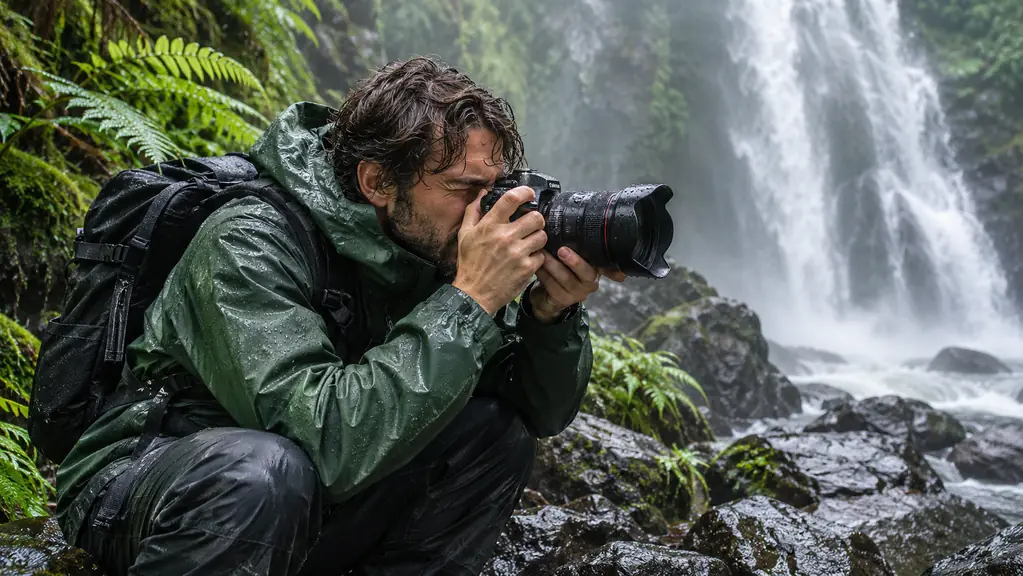
For about two years, my answer to a smudged front element was the hem of whatever shirt I happened to be wearing. That worked fine until a wet Saturday at Onomea Bay, when salt spray and a little sunscreen turned my everyday zoom into a gray smear I could not clear. I shot around it for the rest of the walk, which is a polite way of saying I came home with forty soft photos and one honest lesson.
So I bought the Altura Photo camera lens cleaning kit in August 2024, and it has lived in my sling bag and my desk drawer ever since. A friend at the camera club uses a single lens pen instead, and after watching her clean her glass in about four seconds at the Hilo Farmers Market, I understood why she likes it. Here is the short answer before the long one. If you clean your glass at home and after wet hikes, the Altura Photo kit does more jobs. If you need something in a shirt pocket that works one-handed in wind, a single lens pen does that better. Most hobby photographers I know end up wanting the first one and carrying the second.
| Altura Photo kit | Single lens pen | |
|---|---|---|
| Jobs it covers | Spray and cloth for smeared glass, blower and brush for grit, plus a lens pen for a quick touch-up | One pad and one brush, for the glass surface only |
| Loose grit before you wipe | The air blower lifts dust and sand off the glass before anything touches it | A brush on one end, but nothing to lift grit away before brushing |
| Dried salt and sunscreen film | The alcohol-free, ammonia-free spray dissolves the film and a cloth lifts it off | The pad pushes a dried film around and leaves a gray circle |
| Pocket space | A pouch that stays in a drawer or a bag pocket | Clips in a shirt pocket, about the size of a marker |
| Wind, rain and wet hands | Two hands, a cap to manage, and liquid to keep upright | One hand, no liquid, works with cold fingers |
| Air travel | 56.7 ml, so it is allowed, but it still goes in the liquids bag | Nothing to declare and nothing to spill |
| Seams, viewfinder, hood threads | The brush and blower reach places a flat pad cannot | The pad only reaches flat glass |
| Best for | Cleaning at home and after a wet hike | A four-second fix between frames |
How I Compared Them
Fair warning on my credentials. I have used the Altura Photo kit for about two years, mostly in Hilo's humid air, which is its own kind of test. I have never owned a lens pen. Everything I say about the pen side comes from watching my friend use hers on a telephoto, from handling it for a minute at the market, and from reading a lot of listings and reviews written by people who shoot in places far dustier than mine.
What I actually measured is simple. How many problems each one solves. How many hands it takes. And whether it is with you when the smudge happens. A cleaning tool left at home has a success rate of zero, and that single fact decides more of this comparison than any specification on a listing page.
One Saturday in October I timed it, because guessing was getting me nowhere. A print from Mochi's nose on the front element took me about forty seconds with the kit, start to finish, including unzipping the pouch and packing everything back. My friend did the same job with her pen in under ten. That gap is the whole argument in two numbers.
One thing worth saying up front, because it surprised me when I read the contents carefully. The Altura Photo kit includes a lens pen. So this is not really kit versus pen as two unrelated objects. It is a full kit that happens to contain the other product, against a standalone pen that is smaller, pocketable, and built to be the only thing you carry.
Where the Altura Photo Kit Wins
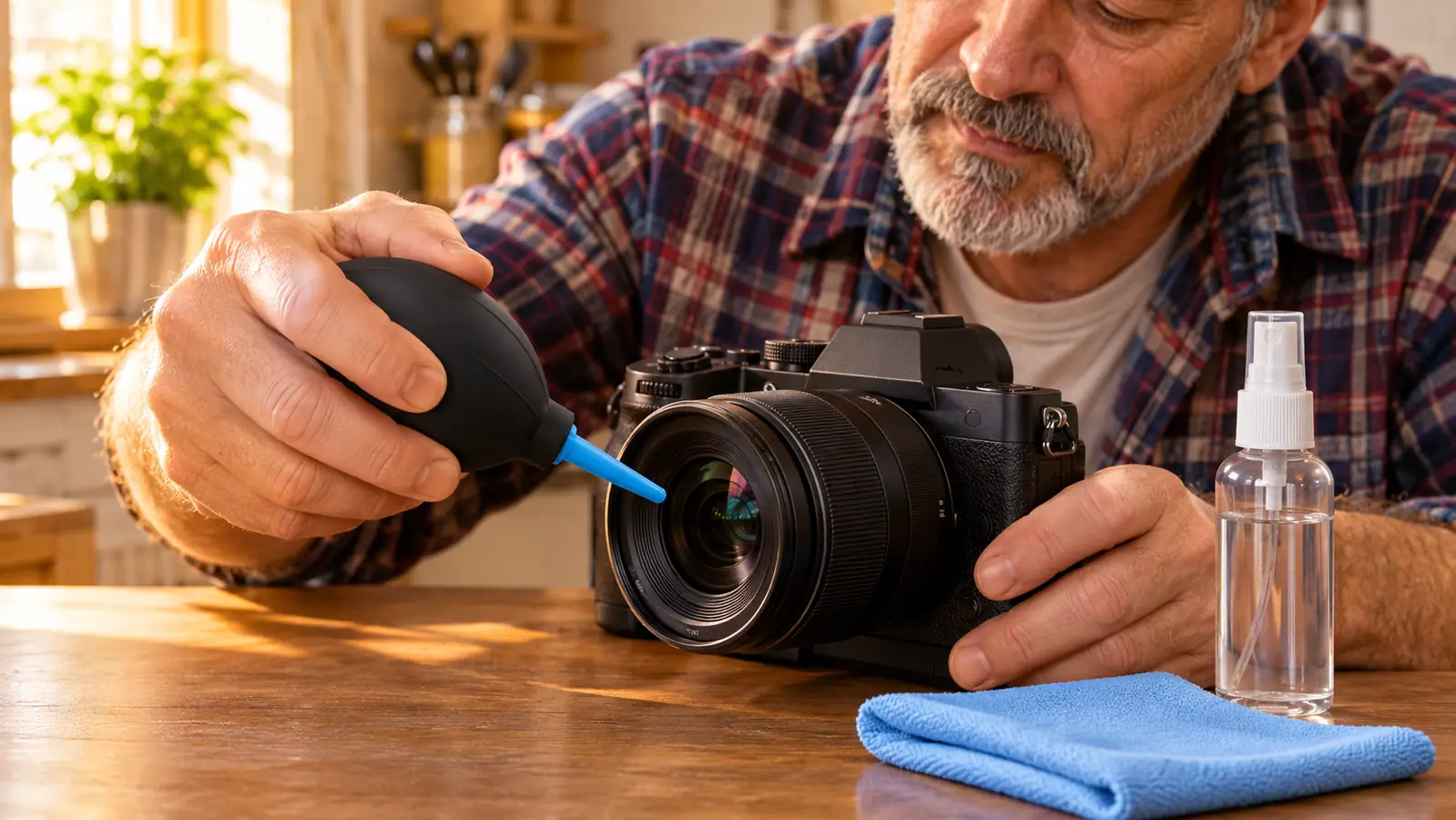
The first win is grit, and it is the one that matters most in a place that rains as much as the windward side does. When I come off a trail there is fine dust on the front element, and sometimes sand. Wiping that with anything, cloth, pen pad, shirt hem, drags abrasive particles across the coating. The air blower lifts the loose material before anything touches the glass, and the brush gets what the air missed. That order, blow, then brush, then wipe, is the whole reason I stopped scratching my glass with good intentions.
There is a version of this that costs you money, and it happened to me in my first year. I wiped a filter straight off the glass with a cloth, no blower, because the dust was invisible against a bright sky and I was in a hurry. That filter now carries a fine scuff I can see when I tilt it toward the window. The blower costs four seconds. I stopped skipping those four seconds after that afternoon.
The second win is the wet stuff. Salt spray dries into a film. Sunscreen from my own fingers dries into a film. A dry pad pushes a dried film around and leaves a gray circle that is somehow worse than the original smudge. The alcohol-free, ammonia-free spray in this kit dissolves that film and a cloth lifts it away, and the glass ends up genuinely clean rather than rearranged. The listing says the solution is odor-free too, which I can confirm, and which matters more than you would think when you are cleaning a lens held close to your face.
The third win is reach. A pad cleans flat glass. It does not clean the seam where the lens barrel meets the mount, the viewfinder window, the inside of a lens hood, or the threads where a filter screws on. Carrying the brush and the blower means I can deal with all of that in one sitting instead of pretending I cannot see it. The case keeps everything in a fixed order, and after two years my hands run the sequence without thinking about it.
It also earns its place on the kitchen table, which is where a lot of my shooting happens. A fingerprint on the front element shows up as a soft gray veil over an entire plate of food, and it is invisible until I open the files. Mochi, my four-year-old black cat, is hard to expose for and also the reason I clean my glass more often than I would like, because she puts her nose against the front element to inspect it. The blower gets the cat hair off first, then the spray and a cloth finish the job in a few seconds.
And the last one is coverage for two people. Dale does not shoot, but he does occasionally pick up my camera to photograph a gecko on the railing, and he has learned to use the blower first because I told him to. One kit in a drawer serves the household. A pen in a pocket serves whoever remembered to put it there that morning.
Where a Single Lens Pen Wins
Now the honest part. My friend's pen lives in her shirt pocket and weighs about as much as a pen, because it is one. She clears a fingerprint in the time it takes me to unzip the sling bag. When you are shooting birds at the feeder and a smudge appears between frames, that speed is not a small convenience. It is the difference between getting the shot and narrating the shot you would have gotten.
My friend keeps hers clipped inside her jacket, and at the farmers market in September she cleared a print with a papaya in her other hand. I watched her shoot again before I had my pouch unzipped. That is not a knock on my kit. It is a description of what each tool was built to do, and hers was built for exactly that moment.
It also wins in wind and with cold or wet hands. There is no cap to fight, no bottle to hold upright, no cloth to keep from flapping. I have stood on the coast with spray coming over the rocks and my hands soaked, and the blow, spray, wipe sequence is a two-hand operation I would not want to attempt there. One hand, one tool, done. That is a real advantage and I am not going to pretend otherwise to make my own purchase look smarter.
And it wins at the airport. The spray bottle here is 56.7 ml, which is under the carry-on limit, so it is allowed. But it still has to come out of the bag in the security line, and it still has to share a zip-top with everything else that could leak onto my clothes. A pen has nothing to declare and nothing to spill. If you fly with a camera and carry-on only, that is the argument, and it is a good one.
The last one I did not expect. Fewer decisions. A pen has one job and one motion. My kit has four things in it and a correct order, and when I am tired I have absolutely skipped the blower because I wanted to be done and eat dinner. A tool that cannot easily be used wrong is worth something, especially at the end of a long day.
The step that prevents scratches is the one a pen cannot do
A blower lifts grit off the glass before anything touches it, and the alcohol-free, ammonia-free spray clears the dried salt and sunscreen film that a pad just pushes around. The Altura Photo kit gives you both, plus a brush, cloths and a lens pen for the quick fix. The blower and one cloth ride in my sling bag. The rest stays where the light is good and my hands are dry.
Amazon Check Today's Price on Amazon →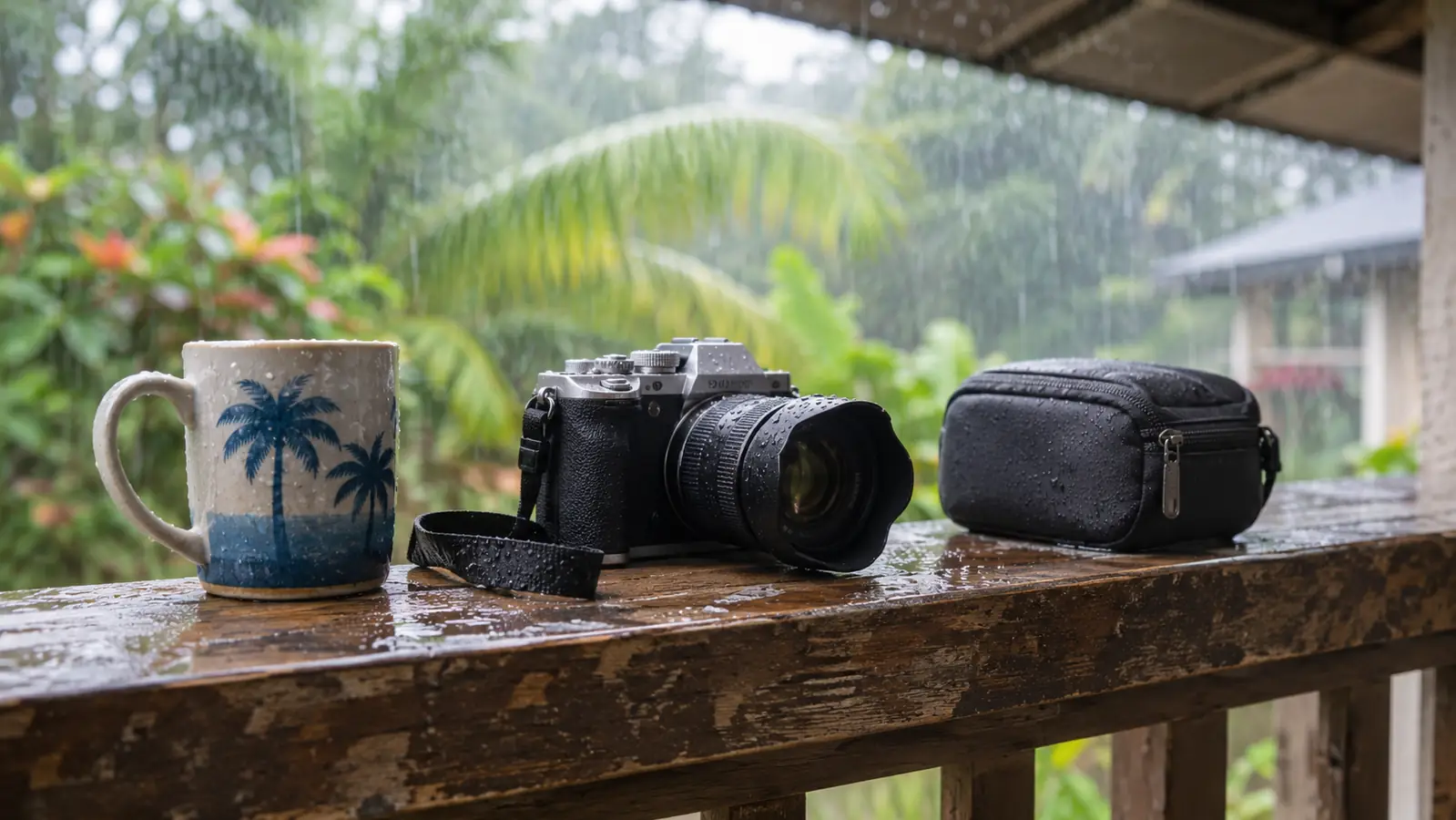
What Neither One Fixes
The thing I did not expect in Hilo is that the enemy is not always visible dirt. It is humidity. Coming out of an air-conditioned car into wet air fogs a lens in seconds, and then you wipe the fog, and then you have a smudge. The fix is patience and a clean cloth, not more rubbing, and it took me an embarrassingly long time to stop polishing condensation. Neither of these two products will teach you that. They will only give you something better than your shirt to do it with.
Akaka Falls taught me the fog lesson properly. Wet morning, camera in the car with the air conditioning running, out into the mist, and the front element went white in about three seconds. I wiped it, which made a smear, and wiped the smear, which made a bigger one. What I should have done was stand still, let the glass reach the air temperature, and use one dry cloth. Fifteen minutes of patience beats anything in this article, and I still forget it about half the time.
The other thing neither one solves is where you keep your gear. Mine is split on purpose. The blower and one cloth travel in the bag, and the full kit stays in a drawer at home. That way the part that fixes an emergency is always with me and the part that does a thorough job lives where my hands are dry and the light is good. If you buy one thing and leave all of it on a shelf, you have bought a nice object and nothing more.
Blow, then brush, then wipe. In two years of shooting in Hilo rain, that order has saved my glass more times than any single product has.
What I Liked
- The air blower lifts grit before anything touches the glass, which is the step that prevents scratches
- The alcohol-free, ammonia-free spray clears dried salt and sunscreen film that a dry pad only spreads
- Includes a lens pen, a brush and cloths, so it covers flat glass and the awkward places a pad cannot reach
- The case enforces a fixed order, which is why I actually do the steps correctly instead of skipping ahead
Where It Falls Short
- It is a pouch, not a pocket, so it stays home more often than I would like
- Two hands, a cap to manage and liquid to keep upright, which is awkward in wind or with wet hands
- The bottle is 56.7 ml, so it is allowed in carry-on but still goes in the liquids bag at security
- The set is not water resistant, so it does not belong loose in a wet pack
Who Should Buy Which
Buy the Altura Photo kit if your photos are mostly made close to home and close to water, and if you have ever looked at a smeared front element and decided to just live with it. It is the one that does a complete job in the right order, and it is the one I would hand to someone stepping up from a phone camera who has never owned a cleaning tool at all. It also makes more sense in humid air, because the spray is the only part of either option that deals with a dried film rather than moving it around the glass.
Buy a single lens pen, or add one, if your camera leaves the house more than it stays, if you shoot birds and need to clear a print between frames, or if you fly carry-on and refuse to think about liquids. Honestly, the version of this I would recommend to most people is both. The kit at home for the real cleaning, the pen in the pocket for the four-second fix. My friend is not wrong and I am not wrong. We just clean at different moments, and after two years I have stopped pretending one moment is the only one that counts.
Clean glass in the right order and stop wiping grit across your lens
Two years of Hilo humidity and this is still the kit in my desk drawer. If you shoot near rain, near salt water, or over a plate of food on the kitchen table, it covers the jobs a pocket pen cannot. One lens pen is included either way, so you are not choosing between the two motions.
Amazon See the Altura Photo Lens Cleaning Kit on Amazon →